We build your shop as a custom design on Shopify, with your brand's typeface, logo and colours. Your team then changes text, images and products itself. Before you sign anything, you click through a preview of your shop.

Custom Shopify store for SMEs – your online shop, built in Switzerland
A shop with its own design that you run yourself
Your solution
What your shop can do
What Shopify brings with it, and how we put it to work for you.
Pay with TWINT
Since June 2025, TWINT has been built directly into Shopify Payments. You don't need an extra plugin for it.
Single products, sets and bundles
Product pages for a single product, a set or a multi-pack, with videos alongside the product if you like.
Multiple languages and currencies
Shopify has both built in. How many you need, we'll work out in the initial consultation.
New products without a rebuild
The theme is built so that you can add further products yourself, without anyone having to set up the shop again.
Shopify, Squarespace or more
Which system suits you
We recommend the system that suits your business, even if it isn't Shopify. For most Swiss SMEs, Shopify is the most pragmatic way into an online shop. That is our assessment, not a rule.
Shopify
A good fit if you want to start quickly. Not the answer if your data has to stay in Switzerland: Shopify runs its servers worldwide, not in Switzerland.
See the system comparisonSystem comparisonSquarespace
A good fit if the website comes first and the shop stays small. We are a Squarespace Gold Partner and will tell you when it's enough.
Go to the Squarespace pageSquarespaceWooCommerce or Shopware
A good fit if your data has to stay in Switzerland. It costs considerably more than a Shopify shop.
See the system comparisonSystem comparison How it works
Four steps to a shop you see beforehand
You know what comes next at every step, and you only decide after the preview.
Initial consultation
Listen. Clarify. Decide.
We clarify what you want to sell and in which languages and currencies. That includes choosing the system: Shopify, or something else if it fits better.

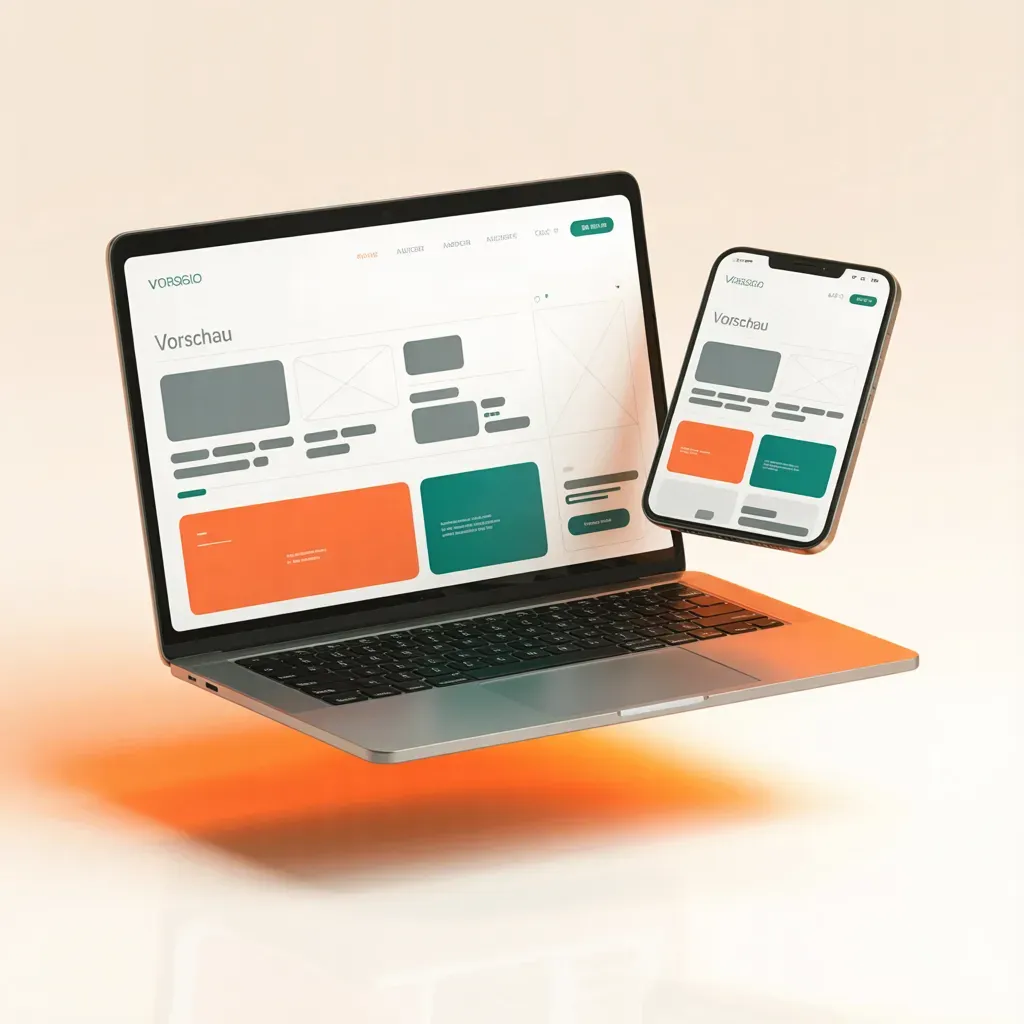
Clickable preview and quote
See your shop before you sign.
You click through your shop, with design variants to compare. The fixed-price quote follows, and only then do you decide.
Build
Your theme takes shape.
We build the theme with the sections you saw in the preview, and set up your products, sets and bundles.

Launch and beyond
Your team takes over.
Your shop goes live. After that, your team runs it itself in the Shopify editor.

Your shop as a clickable preview.
In the initial consultation, we clarify whether Shopify is the right system for you and what your shop should be able to do.

Your shop — enquire now, no obligation:
Thank you. We'll get back to you shortly.
Shops & resources
Shopify and online shops in practice.
Projects, guides and comparisons on online shops for Swiss SMEs.
 Guide
AI and automation8 minAutomate Squarespace with Make: What really works in the shopMake can automate Squarespace mainly in the shop: new orders land in a spreadsheet, accounting or team chat **without retyping**, and stock levels and products stay up to date. To do this, Make che…
 Guide
AI and automation9 minSquarespace MCP server: run your shop with Claude and ChatGPTThe Squarespace MCP server is the official connection that lets Claude or ChatGPT access your Squarespace shop. You create products, change prices and stock, and look up orders and contacts by writ…
 Article
Consulting & conception9 minShopify Cookie Banner: the compliance guide for Swiss shopsA Shopify store collects data the moment someone opens the page — through Google Analytics, the Meta pixel or marketing tags. Whether that calls for a Shopify cookie banner is not decided in Switze…
 Article
Web design9 minWooCommerce: When It Makes Sense — and When It Doesn'tWooCommerce is the most popular e-commerce solution in the world — and it's free. Both statements are true, and both lead to poor decisions. This article helps you assess whether WooCommerce fits y…
 Guide
Web design11 minCreate an Online Shop — What Swiss SMEs Need to Know in 2026Planning an online shop? Switzerland's e-commerce market reached CHF 15.8 billion in 2025, up 6% year-on-year. Those who invest in a professional online shop now will benefit from this momentum. In…
 Project
Web design5 minWebsite for a winery — find the wine, buy on invoiceHave websites created for wineries: professional web design, online shop, tasting booking and local SEO. Your viticulture, wines and events clearly presented.
Discover all posts Having a Shopify shop built: frequently asked questions
How much does a Shopify shop cost?
The Shopify platform costs from around CHF 30 per month, billed in USD (as of May 2026). Our fee depends on the scope: the number of products, the languages and currencies, and how much custom design you need. We clarify that in the initial consultation. You'll know the preview and the fixed-price quote before you sign.
How long does it take to build a shop?
That depends on the scope: the products, the languages, the currencies and the design. Any blanket figure would be a guess. How long it takes for you, we'll clarify in the initial consultation.
Can I run the shop myself?
Yes. Your team changes text, images and products in the Shopify editor itself, no coding needed. We build the design so that every section has input fields for this.
Can you pay with TWINT in Shopify?
Yes. Since June 2025, TWINT has been built directly into Shopify Payments, with no extra plugin.
Is the data of a Shopify shop stored in Switzerland?
No. Shopify runs its servers worldwide, not in Switzerland. If your data has to stay in Switzerland, you need a different system, and that costs considerably more. We clarify whether that applies to you before choosing the system.
Shopify, Squarespace or WooCommerce?
Squarespace is a good fit if the website comes first and the shop stays small. If your data has to stay in Switzerland, we look at WooCommerce or Shopware. The CMS check shows which system suits you, and the article Creating an online shop compares the systems in detail.