
CMS evaluation

Which CMS fits your website?

Fifteen questions about your website, roughly five minutes. Then a recommendation for one of four systems — with the reasons behind it.
Start the test
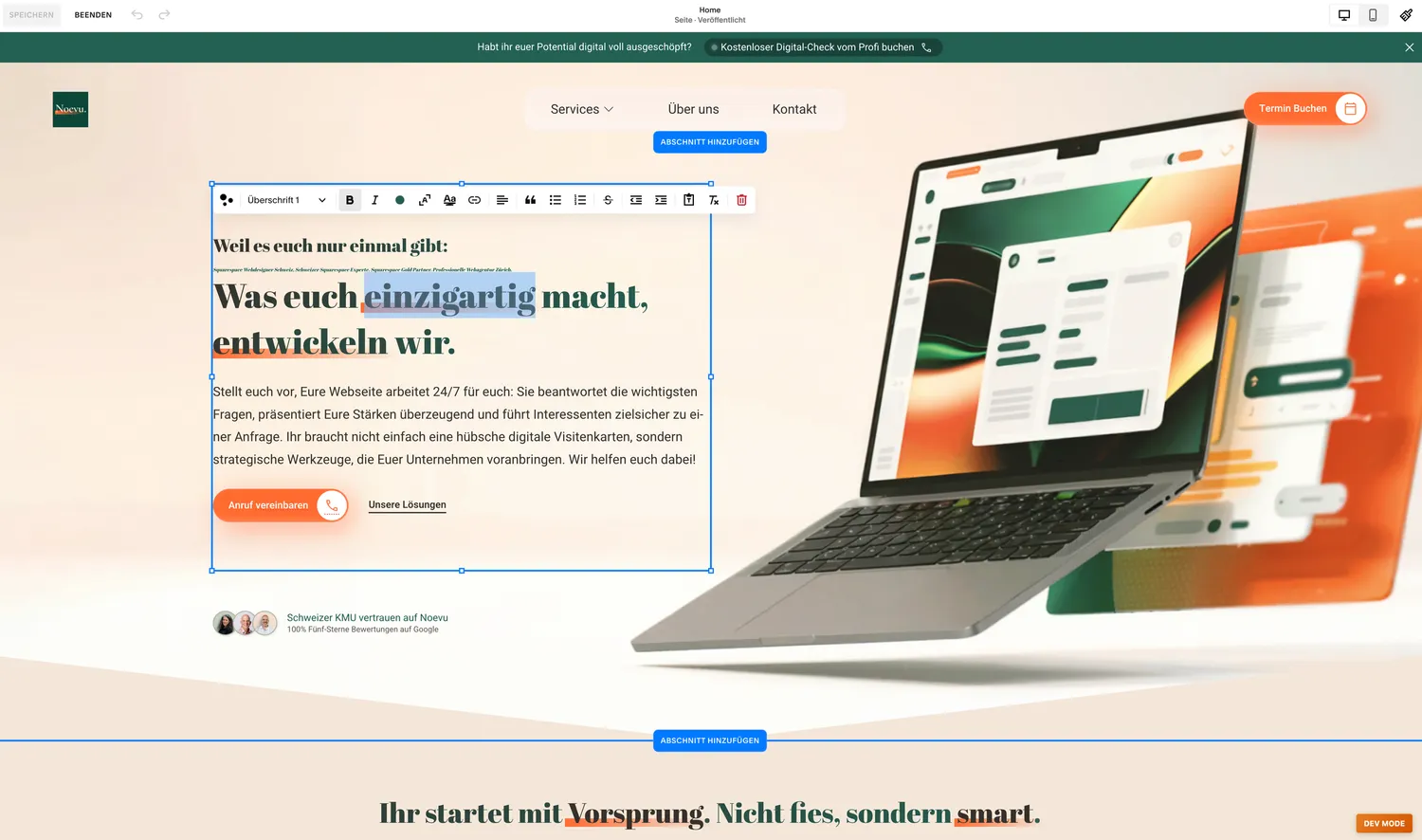
The Squarespace editor with a live preview of a Noevu website: content is edited straight in the page view

Squarespace

A mature builder you run yourselves. Cheap, quickly online, updates included — the freedom ends where special requirements begin: your own design, several languages, your own data.
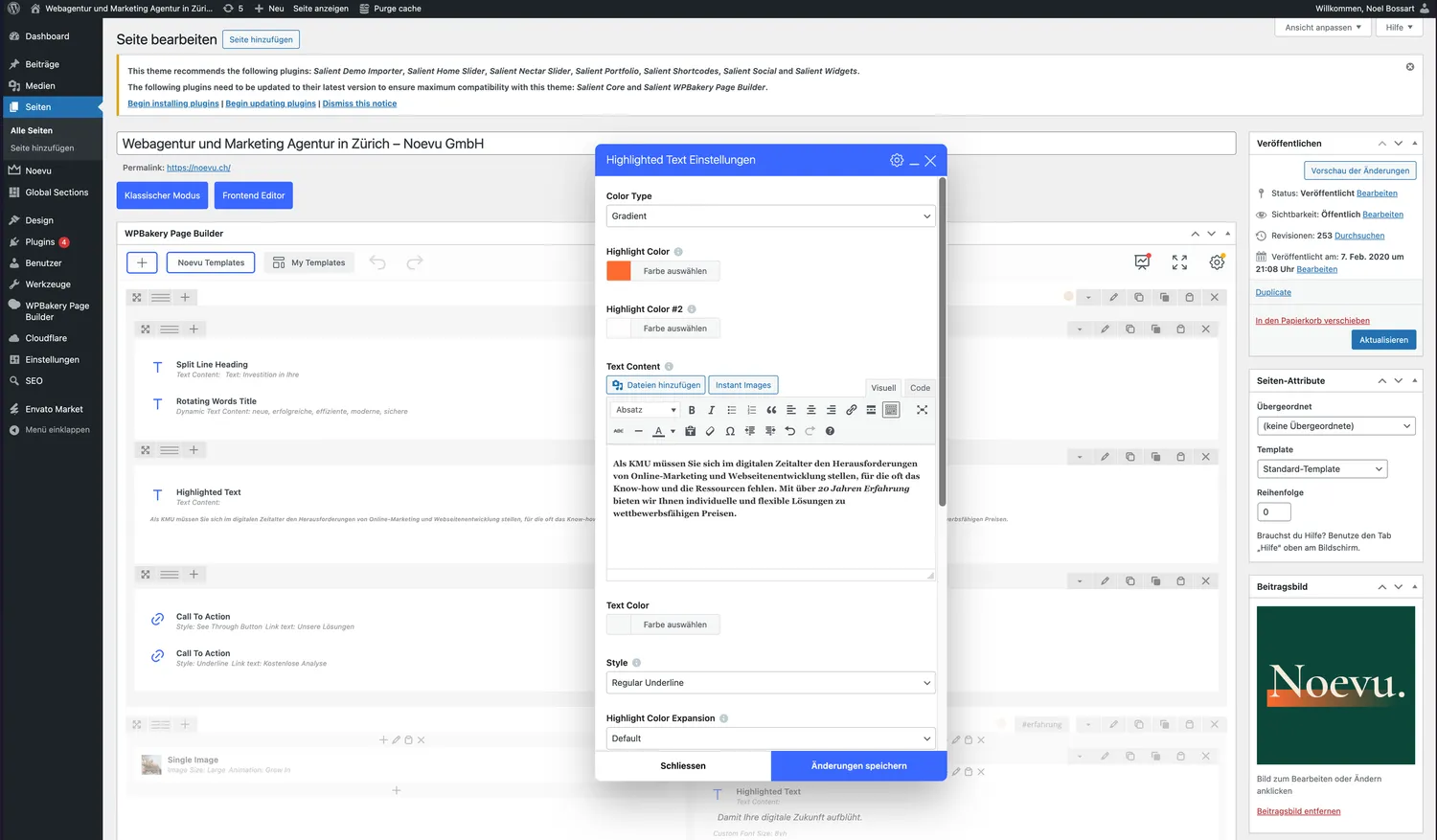
A cluttered WordPress editing view with a page builder, overlapping panels and many modules in a small space

WordPress

The most widespread system: there is a plugin for almost everything. In return the maintenance stays with you, editing gets cluttered fast, and several languages need a paid add-on.
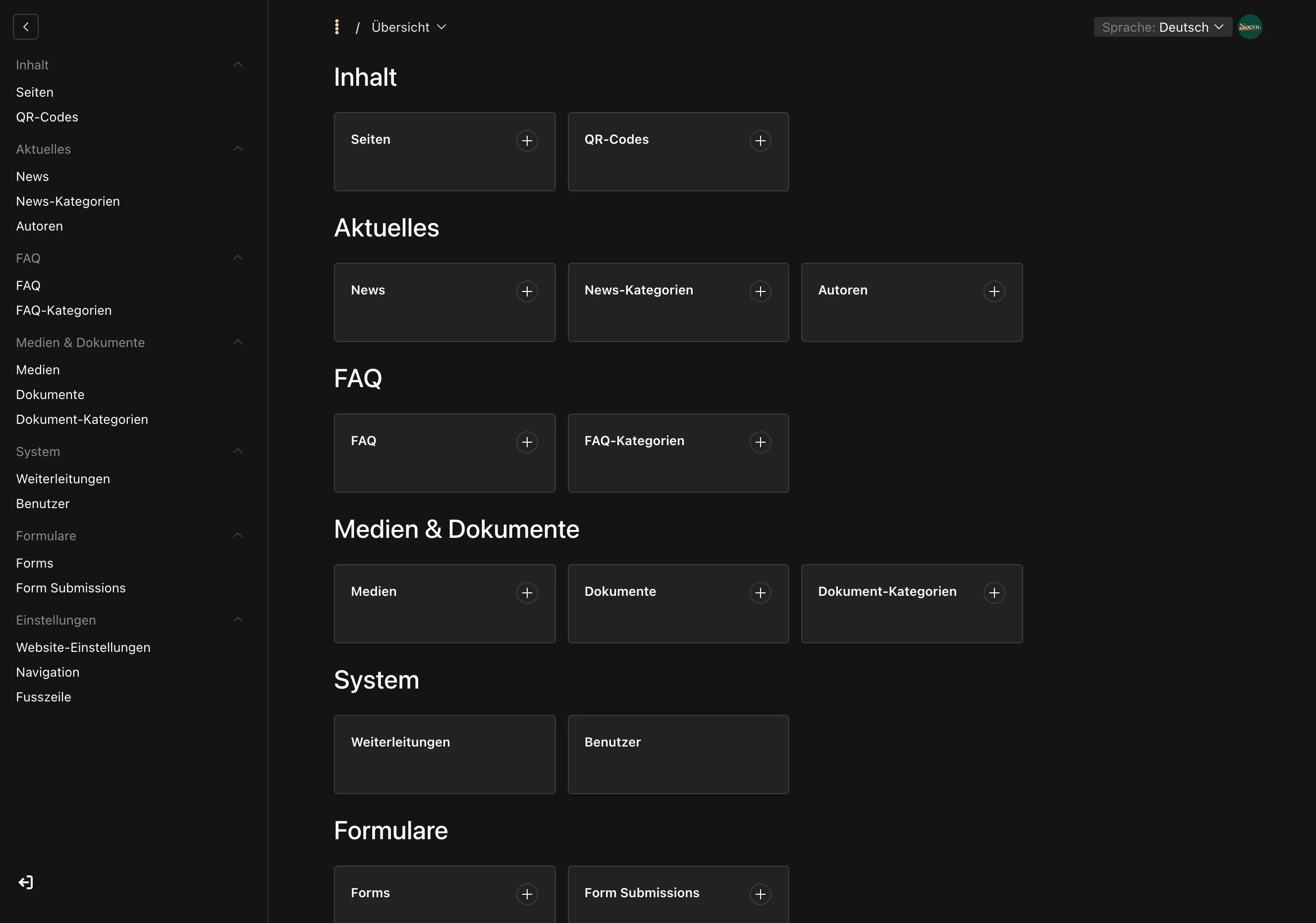
The Payload admin interface: navigation on the left, beside it the overview with tiles for pages, news, FAQ, media and users

Payload

A modern headless system with a straightforward interface. It carries whole applications with accounts and roles, and runs on a server of your own, in Switzerland if you want.
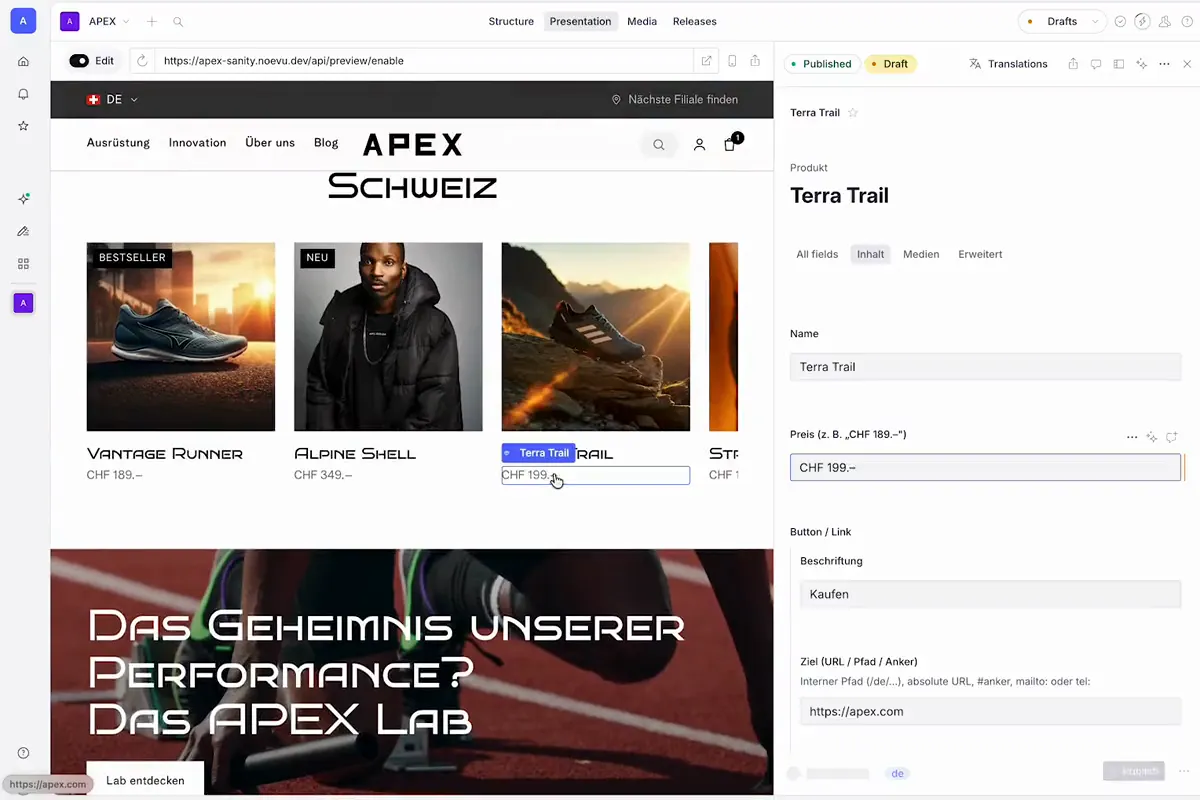
The Sanity Studio of the Noevu demo APEX: the live preview of the page on the left, the product's fields on the right

Sanity

A far-developed headless system: live editing, several people in the same text at once, AI built in. Structured content for many languages and channels.

A word about you — then off we go A word about you — then off we go

Four details, so the recommendation at the end speaks to you. Industry and size do not change the result, they make it useful in a conversation.

Employees
Who builds the site, and who changes it later? Who builds the site, and who changes it later?
  • You set everything up yourselves and keep it running. That takes a system that works without technical knowledge. It rules out a lot, but gets you online fastest.

  • Someone else builds it, then it is on you. What matters then is how much you can change without help: only text and images, or new pages and blocks too.

  • You maintain content, everything technical stays with an agency. How simple the setup is barely counts then — what matters more is how far the system can grow with you later.

How many people maintain the content? How many people maintain the content?
  • If nobody on your side changes content, the editor does not matter. This answer does not shift the result.

  • For one person, what counts is how fast they find their way around. Roles, approvals and working at the same time as others are not needed.

  • From two people on, it matters that each can change their part without shifting someone else's page. That works better when content sits in fields instead of free-floating on the page.

  • Several people working at once need fixed fields instead of freely movable layouts, or sooner or later something shifts out of place. Editorial systems can do that; site builders less so.

How many pages does the website have? How many pages does the website have?

Size and rhythm count separately — many pages that rarely change point somewhere else than a few that change all the time.

  • With few pages, a lot of structure does not pay off yet. You maintain each page on its own, and that stays manageable.

  • From around ten pages on, reuse starts to count: change a block once and it changes everywhere, instead of by hand on every page.

  • With many pages, navigation, overviews and cross-references become the real work. Then it counts whether the system assembles them itself or you maintain them by hand.

How often does something on it change? How often does something on it change?
  • What rarely changes does not need a system that makes changing especially easy. What counts more then is what the build and running cost.

  • Whoever changes monthly works in the system often enough for learning it to pay off, and rarely enough that tools for many people are not needed.

  • Whoever changes weekly works in the website, not on it. Then every click the editor saves counts, and whether you can see how the page looks while you write.

What does the site have to do beyond content? What does the site have to do beyond content?

Multiple choice. We ask what you need — whether an alternative exists is ours to judge.

  • This means forms that do more than send messages: fields that appear depending on the answer, calculations, or several steps. All systems can do simple contact forms.

  • This means the website collects addresses, sends newsletters or triggers workflows. Some systems bring that along, with others it hangs on extra tools.

  • This means a small amount of selling alongside the content, not an online shop as a business. Some systems bring that out of the box, others solve it through a shop service alongside.

  • Customer accounts or a member area turn the website into an application: people log in and see what is meant only for them. Here the systems clearly part ways.

  • This means a connection to a tool you already use, such as a CRM, accounting or booking system. How well that works depends on how open the system is for interfaces.

  • This means your own data records that the website stores, calculates with or evaluates — more than text and images. That needs a system with its own database and logic behind it.

How many languages? How many languages?
  • One language does not tell the systems apart. This answer does not shift the result.

  • Two languages with the same content are doable everywhere, but free nowhere. What counts is whether translation is built in or runs through an extra tool.

  • Several languages with their own content need multilingualism at the system's core: each language with its own pages, addresses and approvals. Bolted on afterwards, this quickly becomes a permanent construction site.

Should the site look like you? Should the site look like you?
  • A good template is online fast and looks tidy — just not unmistakably like you. Whoever is happy with that saves themselves a custom build.

  • A design of your own means: the site follows your identity, not what a template allows. That takes a system that lets design be implemented freely.

What should still be possible in five years? What should still be possible in five years?

Multiple choice. Nothing ticked means none of these weights count.

  • This means being able to switch provider or hosting later without starting over. On rented platforms the site stays there; with open systems it moves with you.

  • This means custom solutions that still run in five years, even as the system keeps developing. On rented platforms and with lots of add-ons, that breaks more easily.

  • This means an AI assistant from outside that reads and changes your content through an interface. Not AI help with writing — that comes later, in its own question.

Should an AI inside the system help you write? Should an AI inside the system help you write?
  • Without that wish, this question does not shift anything.

  • This means AI right inside the editor: text suggestions, translations, variants, without a detour through another tool. Some systems bring that along, with others it has to be built in.

  • If AI should be a fixed part of your work, what counts is whether it is already in the editor out of the box or has to be added later. This means help with writing, not other programs accessing your content.

Budget for the build and for support? Budget for the build and for support?
  • Without a budget for the build and support, all that is left is what you can set up yourselves. That is an honest path, but it narrows the choice a lot.

  • This means the budget for the build, not ongoing running costs. A small budget speaks for a system that brings a lot ready-made instead of a lot custom-built.

  • If the build is paid for, what counts is which system carries the most afterward. The difference usually does not show in the first year, but when requirements grow.

Do you need graded permissions for different roles? Do you need graded permissions for different roles?
  • Without graded permissions, this question does not shift anything.

  • A few roles means, say: some write, others approve, someone administers. Most editorial systems can do that; site builders only to a limited extent.

  • Finely graded means: you decide who may see and change which areas, or even individual fields. That needs a system where permissions can be freely defined.

How much do speed and findability matter — in search engines and in AI answers? How much do speed and findability matter — in search engines and in AI answers?
  • Without a particular demand on load time and findability, this question does not shift anything.

  • Load time and clean markup help decide whether search engines and AI answers find you. What counts is how much influence you have over what the page delivers.

  • If visibility is your livelihood, every tenth of a second and every piece of markup counts. Reliable top scores only come with a front end of your own, over which you have full control.

Where may your data live? Where may your data live?

This question beats the score: systems that miss your requirement drop out.

Do you sell through the site? Do you sell through the site?
Do you need TWINT? Do you need TWINT?
About you About you

Two details about your current website and where the recommendation should go. None of it changes the result.

What runs your website today?
Why are you taking the test?

We send your result to this address.

Shall we talk it through? Shall we talk it through?

Fifteen minutes, free, with no quote afterwards. You can also go straight to the result.

Squarespace WordPress Payload Sanity
Editor Site builder, anyone moves anything Page builder, depends on the theme Fields and roles, live preview Fields, live editor, AI help
Data location USA, content exportable Server of your choice Server of your choice, Switzerland included Content Lake in the EU
Application logic Member area, nothing else Through plugins, awkward Accounts, roles, own data Content store, logic beside it
Operations Subscription, updates automatic Maintain updates and plugins Own server, own upgrades Backend stays current on its own
Design Templates, limited freedom Themes, plugins leak through Free, own front end Free, own front end
Languages Only via Weglot, expensive WPML, permanent maintenance Localisation built in Built in, translation in the studio
Running costs Subscription per month Maintenance, plugins, security Server plus support Seats plus support

As of September 2026. The rows are the criteria the test calculates with.

Unsure what your result means for you?

Fifteen minutes are enough to walk the recommendation through your case — with no quote afterwards.

New Homepage Projects & Resources

Successful website projects from practice.

Frequently Asked Questions

What does the CMS evaluation cost?

Nothing. The test runs in the browser, the result appears straight away, and no invoice follows.

How long does the test take?

Fifteen questions, roughly five minutes. The questions about your company come last and do not change the result.

What happens to our details?

They reach us by email and stay there. No selling on, no newsletter without your say-so. The shareable result link carries only your answers, no name and no address.