
A new foundation with no website — and a model that needs explaining
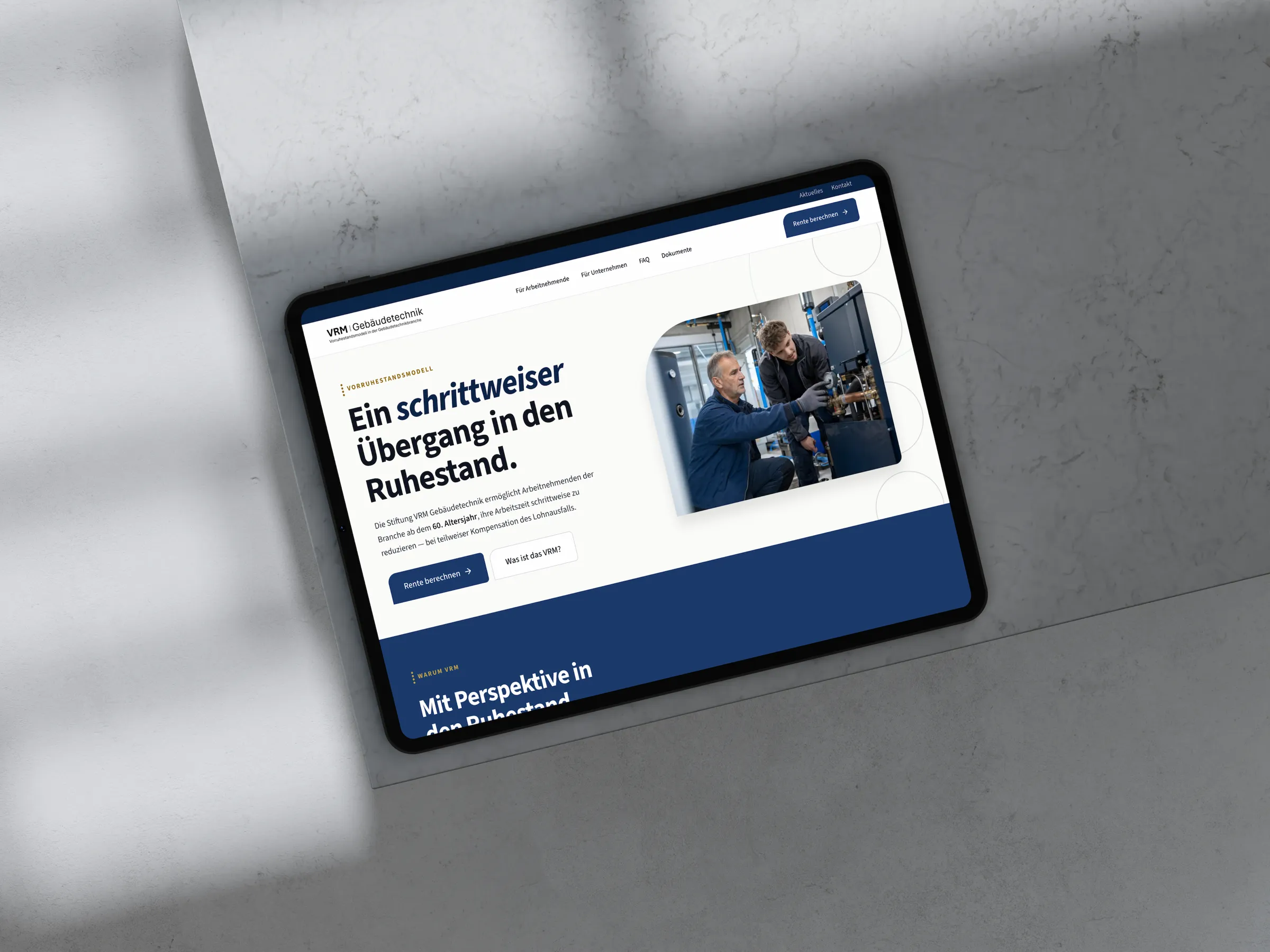
VRM Gebäudetechnik became operational in early 2026: a pension foundation giving employees in the building technology trade a gradual path into retirement. Before launch, there was no website — and a model that doesn't explain itself. Everyone contributes, but only some are eligible. Two audiences — employees and companies — need very different answers before the first contributions start in 2027.
Foundation & Mission
- Pension foundation for the building technology trade · Wallisellen ZH
- Early retirement model with partial wage compensation from age 60
- Two audiences: employees and companies
Project
- Conception, UX and web design from scratch
- Custom editing system built for VRM
- AI imagery in brand style · AI translation DE/FR/IT
Result
- Working prototype delivered before signing
- Trilingual and live — further languages planned via AI
- Team manages content independently
What made this project demanding
The challenge wasn't technical — it was clarity. The eligibility rules are dense: how long someone has worked in the trade determines their entitlement. An employee has very different questions from a Managing Director trying to make sense of his company's contributions. Both needed space on one site, without overwhelming either.
Add to that three official languages with legally precise pension terminology, and a newly appointed Managing Director who needed to convince his foundation board. Terms like «early retirement» were off-limits for legal reasons.
Why a prototype before signing made the difference
Before any contract existed, there was a working prototype — including a calculator that computed pension benefits live. VRM didn't see a presentation; they used a real website. That removed the foundation's risk and gave the decision a concrete basis. The first reaction to the prototype: «Really cool — I love it.» Shortly after, the foundation board selected Noevu.
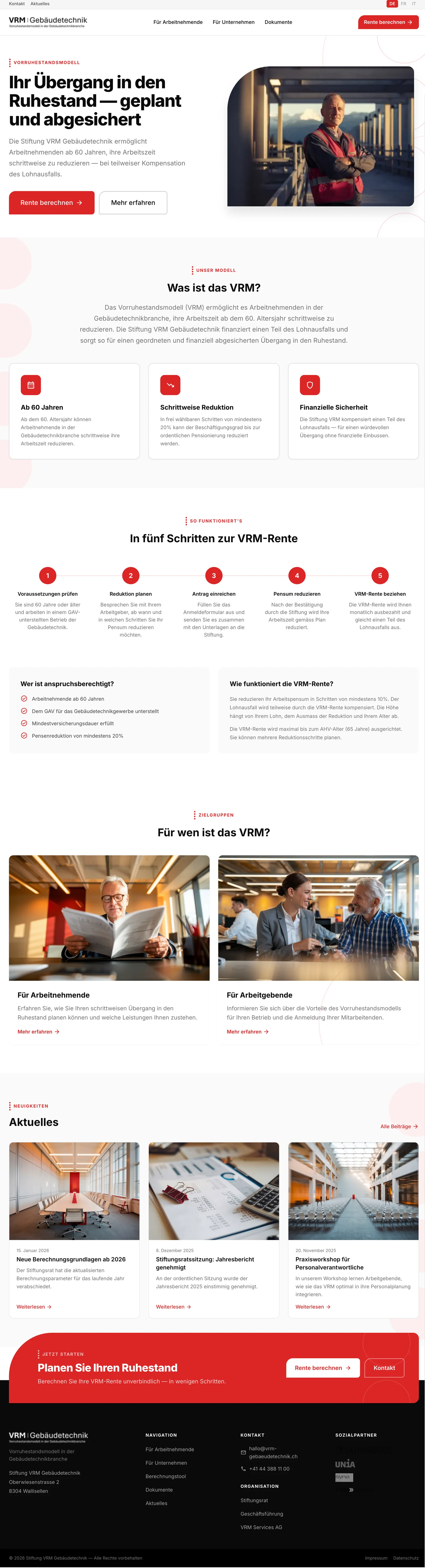
February 2026: a working prototype with a real-time calculator — before any contract. VRM chose this layout; the refinement came mainly in the colour palette.
Two design directions were on the table. One explored a new visual motif; the other stayed closer to the original layout. When the new direction didn't quite land, it was adapted rather than defended: back to the first layout, the new calculator and FAQ functions kept, the colours sharpened — within days. A modern, AI-ready build makes those pivots inexpensive.
A platform VRM manages itself
At the heart of the platform is a calculator that works through the expected pension benefit step by step. Adjust a parameter, see the result immediately — no form to submit, no waiting. That live, adjustable view was something the managing director particularly highlighted in his presentation to the foundation board.
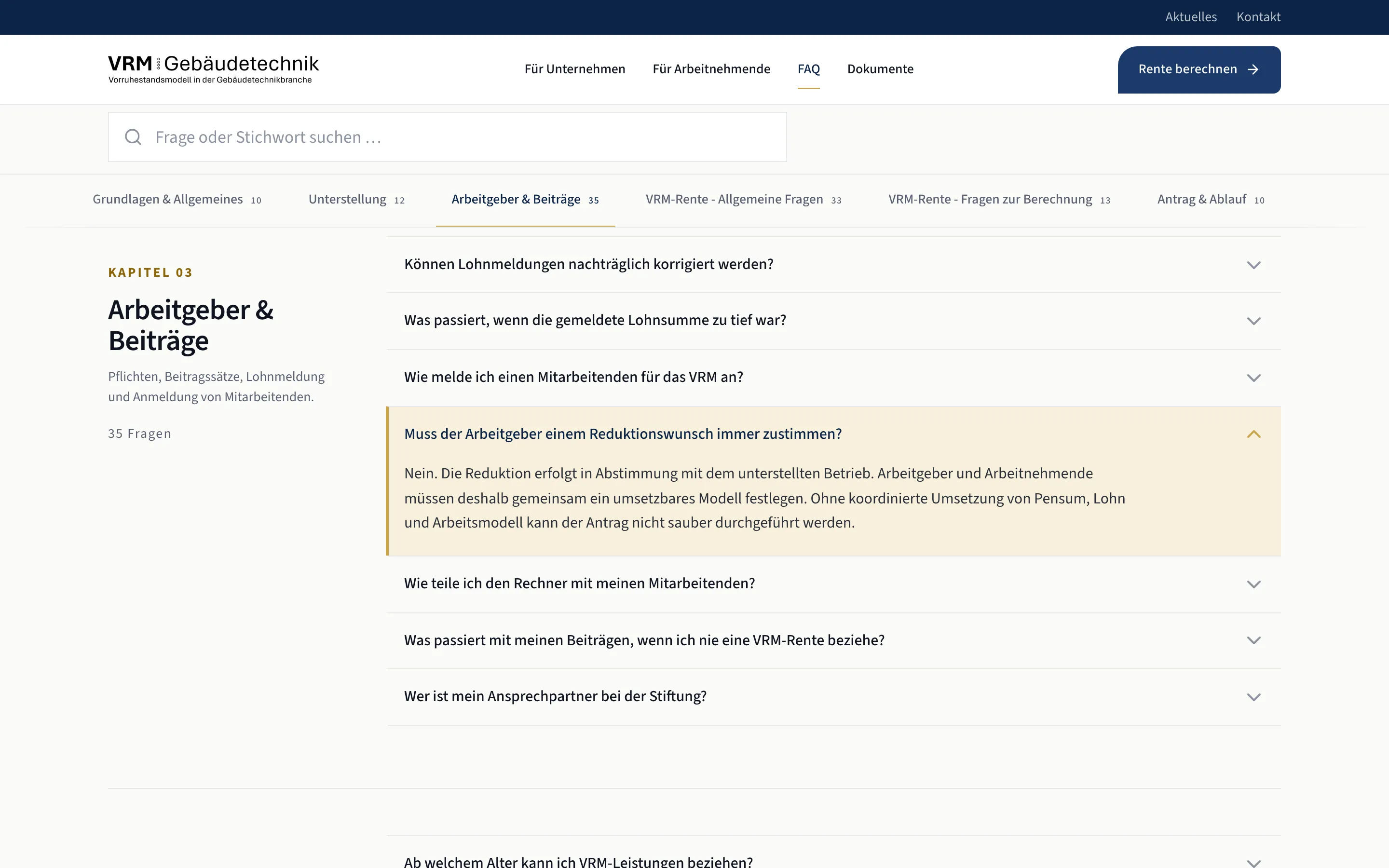
Frequent questions are answered in a searchable FAQ section with 118 entries. A search field filters in real time and is forgiving: type «wages» and results for «wage» appear too. Matches are highlighted and the relevant answer opens automatically. The foundation had asked for this search — and it was live a few days later.
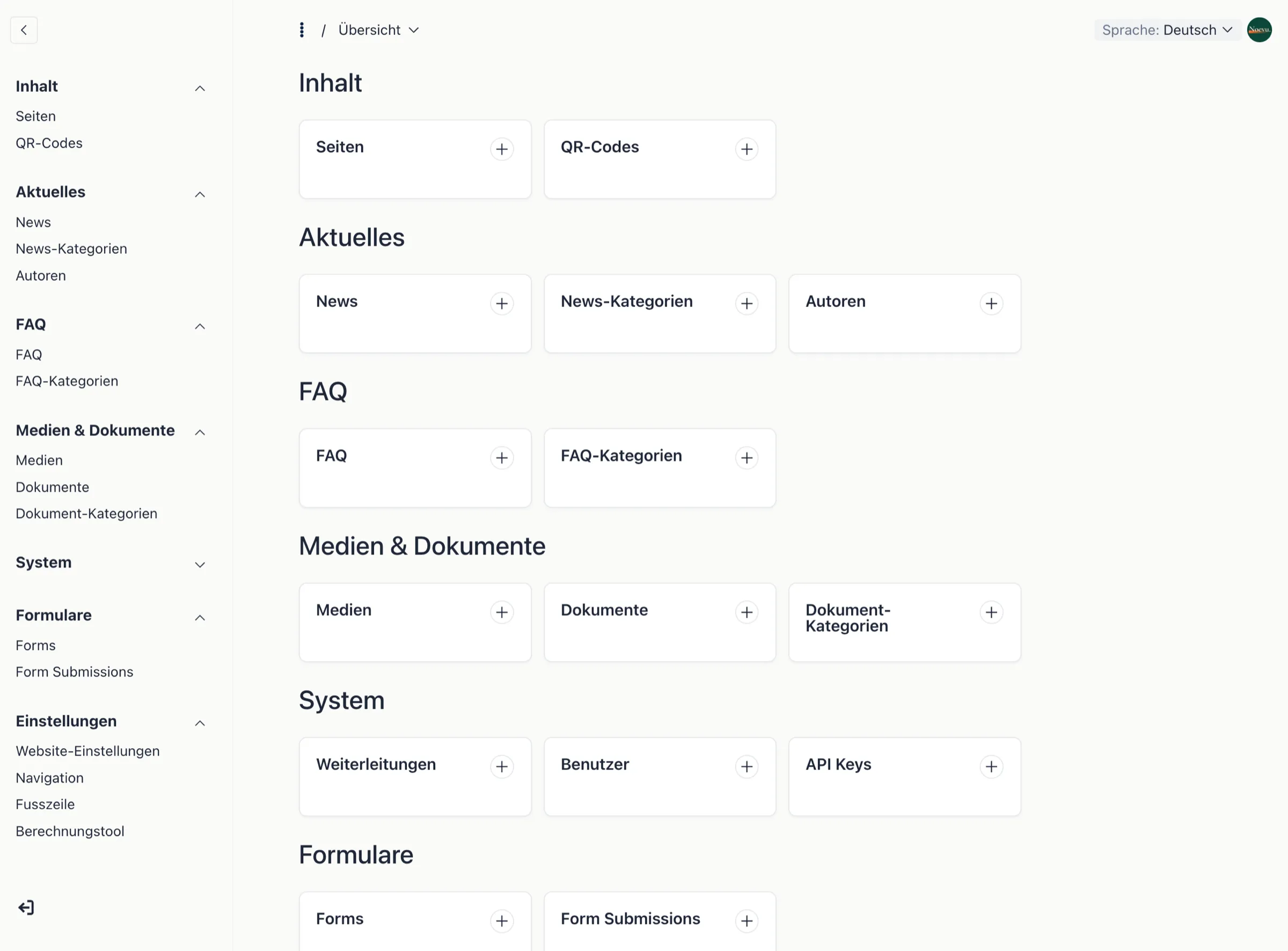
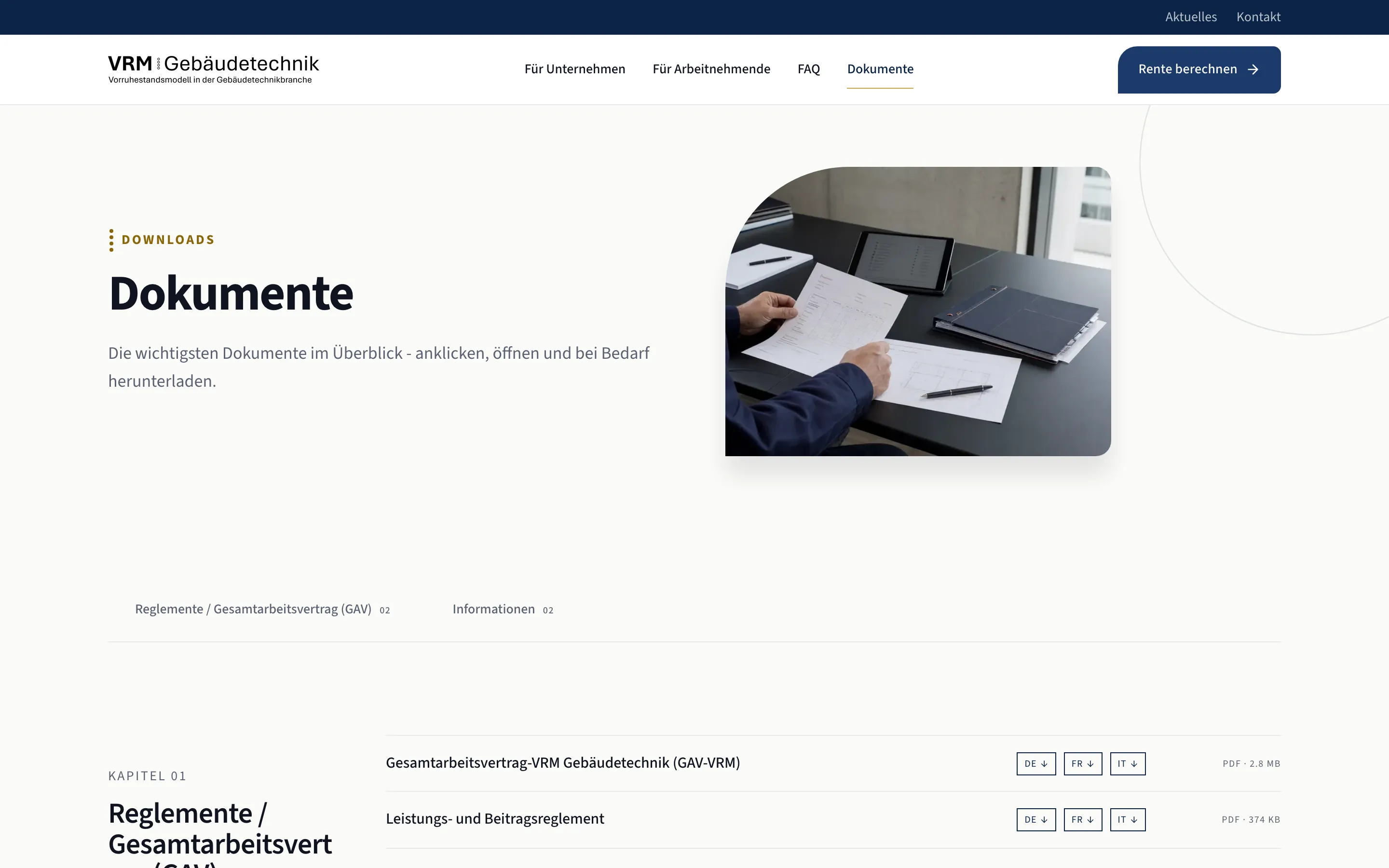
Behind the website is an editing system built specifically for VRM. The team updates content themselves, without a developer. A section can be hidden rather than deleted — nothing is lost. Documents sit in a central area, uploaded per language and sorted by category. And a translation is generated at the click of a button.
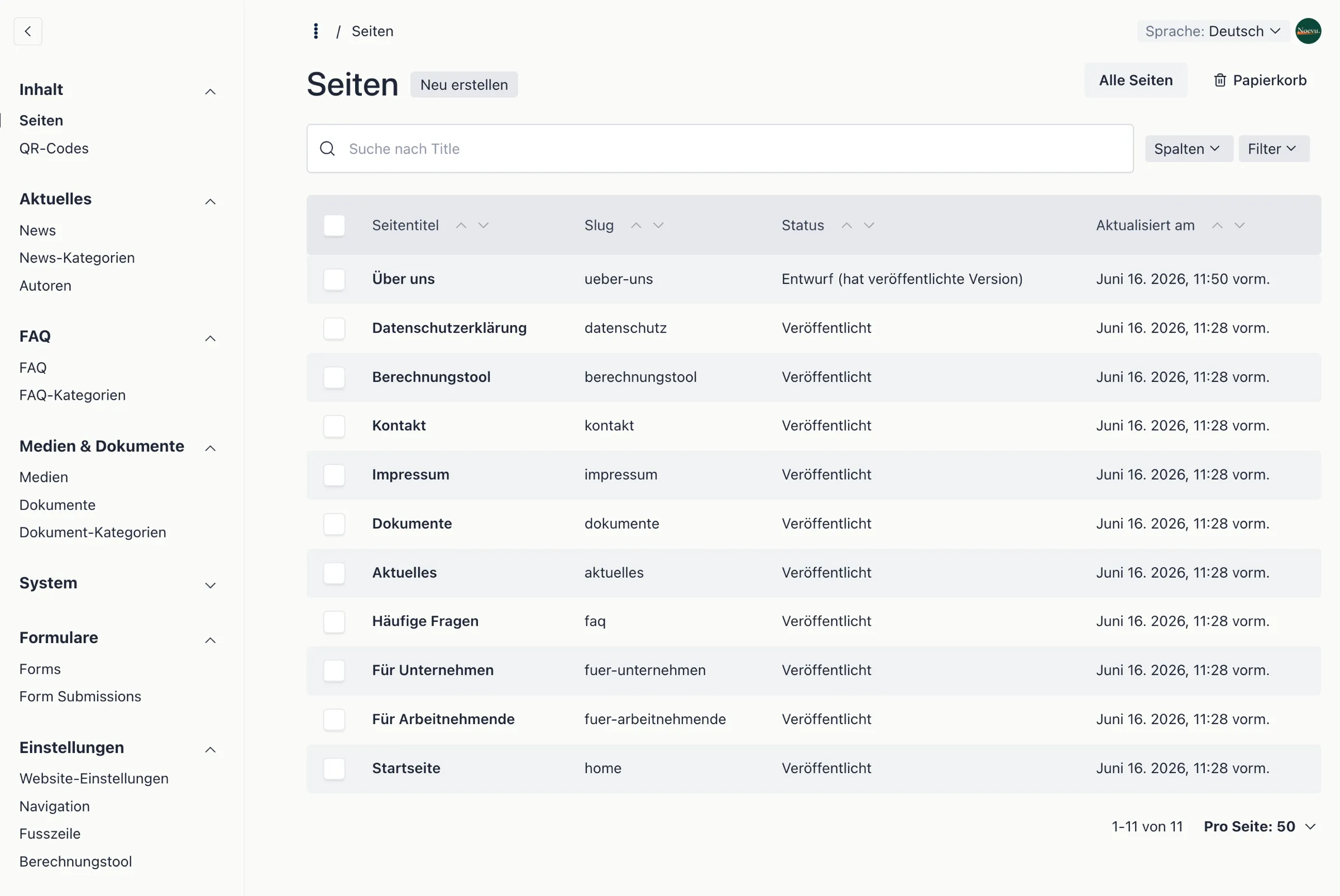
Every page carries a clear status — draft or published. Deleted items go to the trash and can be restored. Nothing is lost.
One detail the team values: the live preview. Edit a section and the change appears right next to the editor — every adjustment is visible before it goes live.
One feature arrived without anyone asking for it: QR codes for printed materials. Instead of a bare URL, each code shows which flyer or poster actually drives visits — privacy-friendly, without collecting personal data. The foundation can see which action works.
The team also runs its own news: a dedicated section keeps employees and companies up to date — in all three languages.
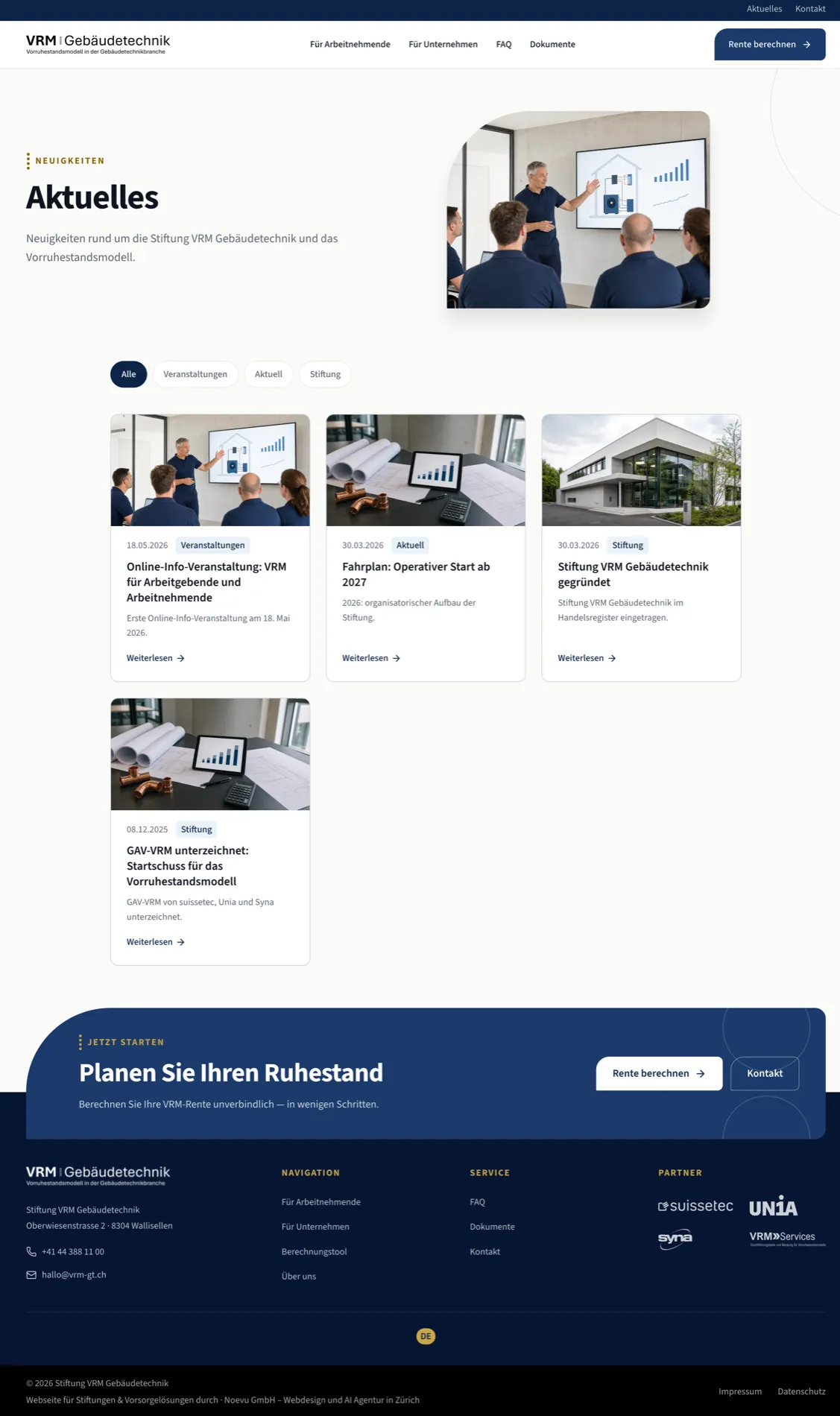
The entire website in French and Italian — with AI
German, French, Italian: three official languages are mandatory for a Swiss pension foundation. The entire translation was produced with AI — grounded in the terminology of the sister foundations so every technical term fits. Thanks to Payload, a CMS that works especially well with AI, the whole site could be translated in a single day. Before publishing, VRM reviews every text in the editing system. Additional languages, such as Turkish, can be added later with the same method.
In a pension model, every word carries weight. A mistranslated technical term can raise an expectation that isn't legally grounded. That is precisely why every translation is reviewed in the editing system before it goes live.
Consistent AI imagery in the foundation's corporate design
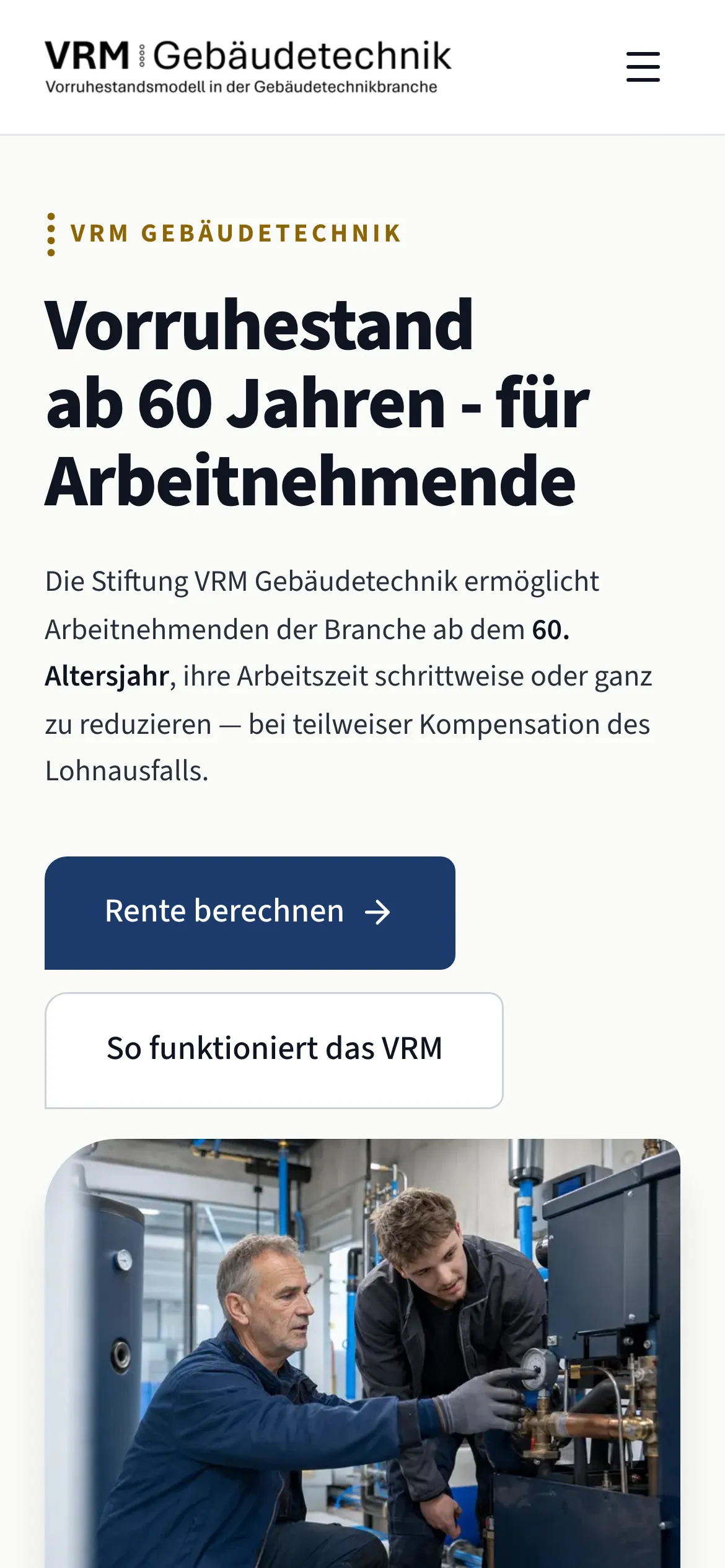
To give the imagery a look that fits the foundation, a custom AI visual world was created in the brand style — scenes from everyday building technology work instead of interchangeable stock photos. Consistent, expandable at any time, and without recurring photo shoots.
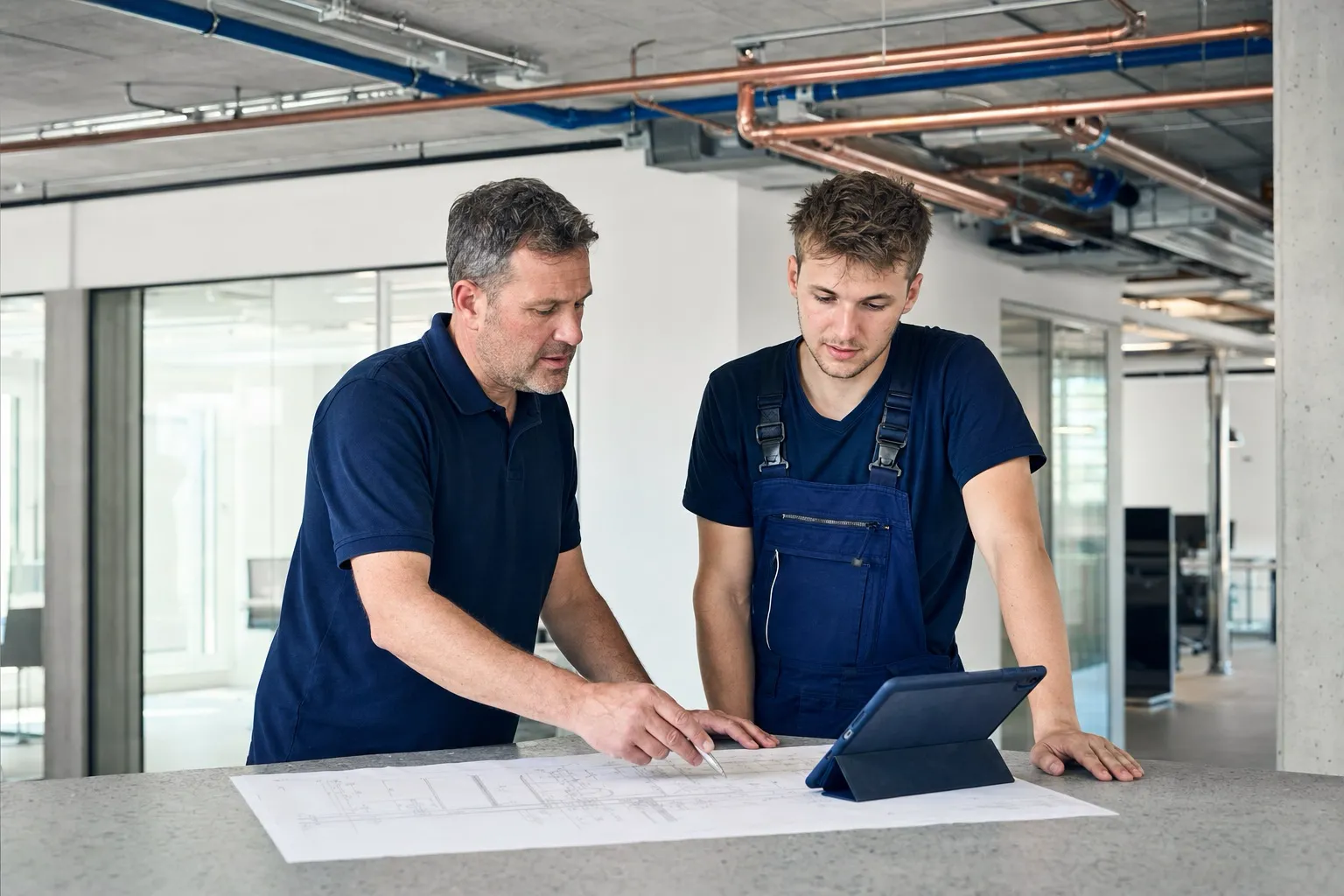
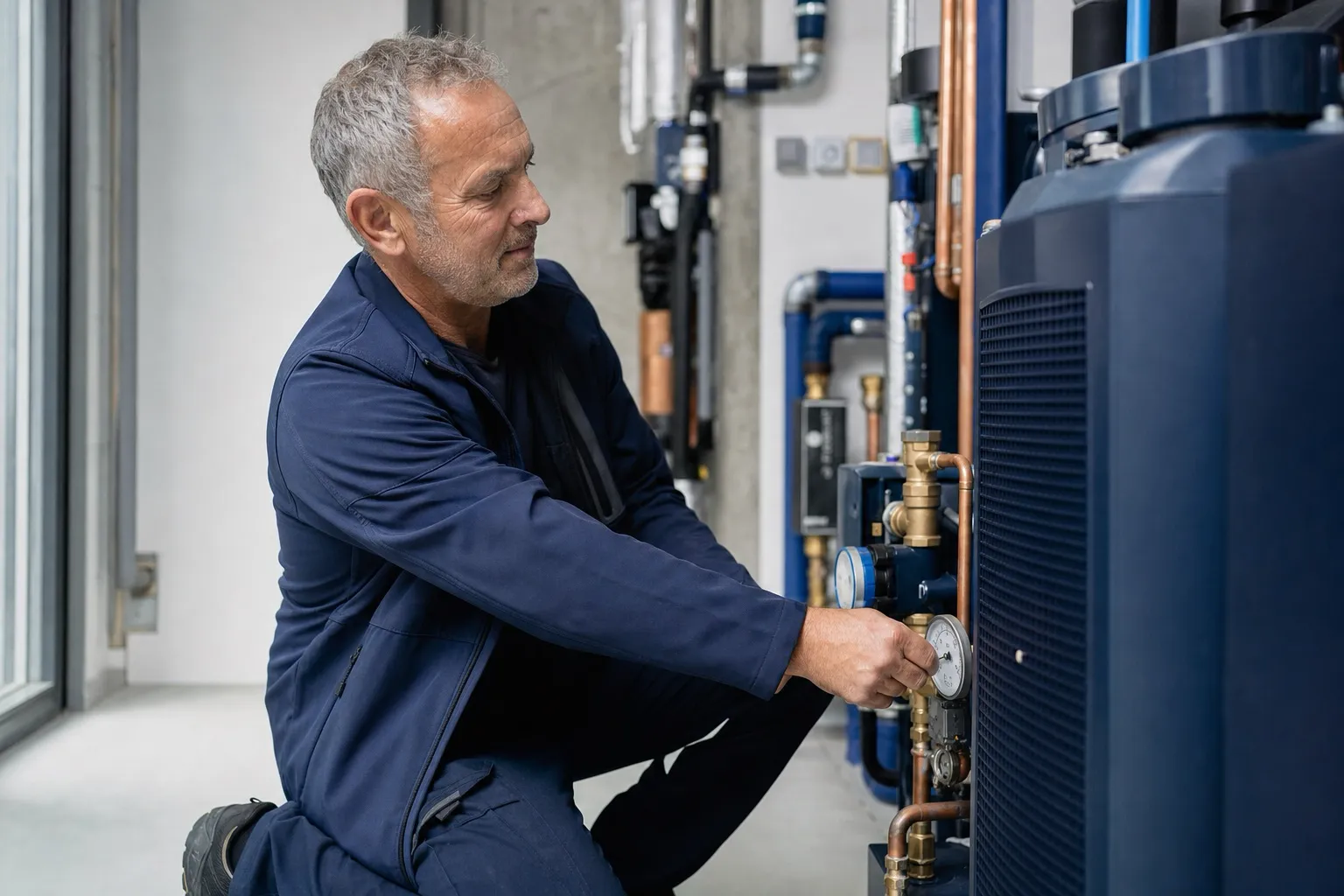
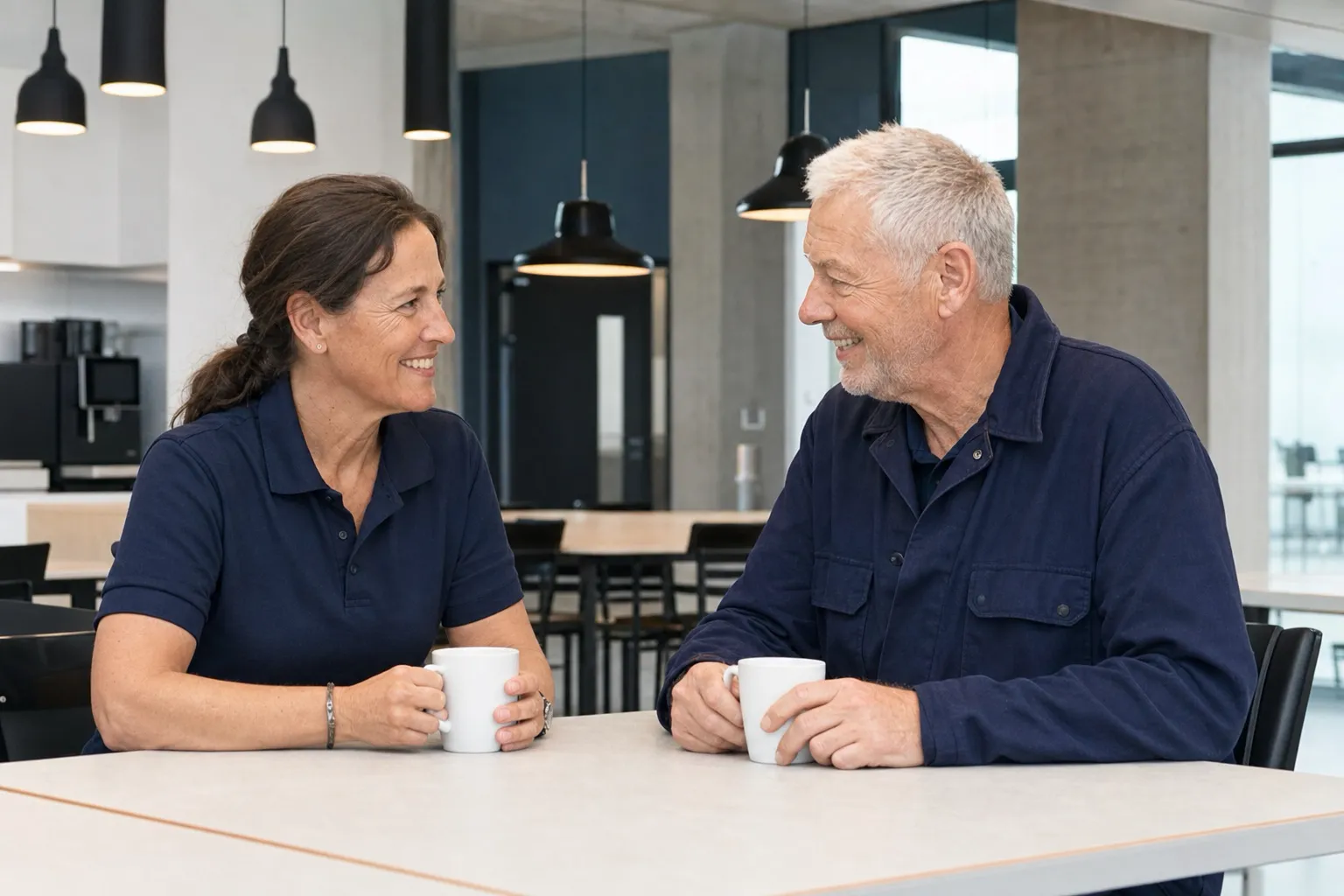
VRM manages these images in the same admin — with descriptions for search engines and screen readers, sorted by category. Here too: maintained without a developer.
There are also short explainer videos: AI-produced motion graphics walk through topics like eligibility, registration and HR compliance — clear in a minute or two, without an expensive film crew.
What is measurable from day one
The platform has just launched — visitor numbers will follow. What can be demonstrated today is technical quality. Google scores every website publicly across four categories, providing a neutral benchmark.
- 98 of 100 Performance
- 100 of 100 Accessibility
- 100 of 100 Best practices
- 100 of 100 SEO
What already counts today

In plain terms: the site loads instantly even on an older phone, it works for people using a screen reader, it follows current security standards, and search engines find every piece of content reliably. The full report is publicly available at Google PageSpeed Insights.
The reaction on go-live
Before going live, the board worked through one last feedback list and saw every point cleared quickly. The reactions to the finished platform were unmistakable.
Brilliant — I'm really happy, the site looks fantastic. After an intensive and exceptionally productive collaboration everything runs smoothly; the new website presents the foundation in a modern, accessible way. Many thanks for the enormous effort — much appreciated.
What made this project work

Three decisions carried this project. Working software before the contract is signed removes the client's risk — the decision is based on a usable site, not slides. Fast, ego-free adaptation beats defending the first idea the moment a direction stops working. And an editing system that grows with the organisation makes the team independent — and the platform ready for further foundations. Twenty-five years of experience live in exactly these three choices.
Go-live is only the beginning. Next come additional languages via AI, and an AI chat assistant is in the pipeline. The same foundation will carry further VRM foundations in the future — a platform that performs today and stands even stronger in three years. Anyone facing a similar step will find a starting point under custom website design.

A free conversation shows what a custom, AI-ready web presence could look like for your organisation.
Frequently Asked Questions
What is VRM Gebäudetechnik?
VRM Gebäudetechnik is a pension foundation for the building technology trade. It enables employees from age 60 to transition gradually into retirement — with partial wage compensation, funded jointly by employers and employees.
Why a custom platform instead of a template?
A template would have forced the complex pension model into a structure that was never designed for it. The custom platform belongs to VRM, can be translated into additional languages at the click of a button, and can be managed by the team without a developer for every change. The same foundation can support further VRM foundations down the line.
How quickly can a multilingual website be delivered?
The full VRM website was translated into French and Italian in a single working session using AI. Every term is reviewed in the editing system before going live — the foundation retains full control over legally sensitive pension terminology.
What does a pension platform like this cost?
It depends on scope, languages, and additional features. Every project comes with a binding fixed-price offer — a clear scope of work, no surprises. A first orientation starts at around CHF 12,000, depending on requirements.