Patients and referrers decide online — in seconds. Your site must radiate hygiene, competence and modernity without stocky imagery. Noevu builds websites for Swiss dental practices, dental labs and dental specialists.
Websites for dental practices that win patients
Professional web design for dental practices & dental tech
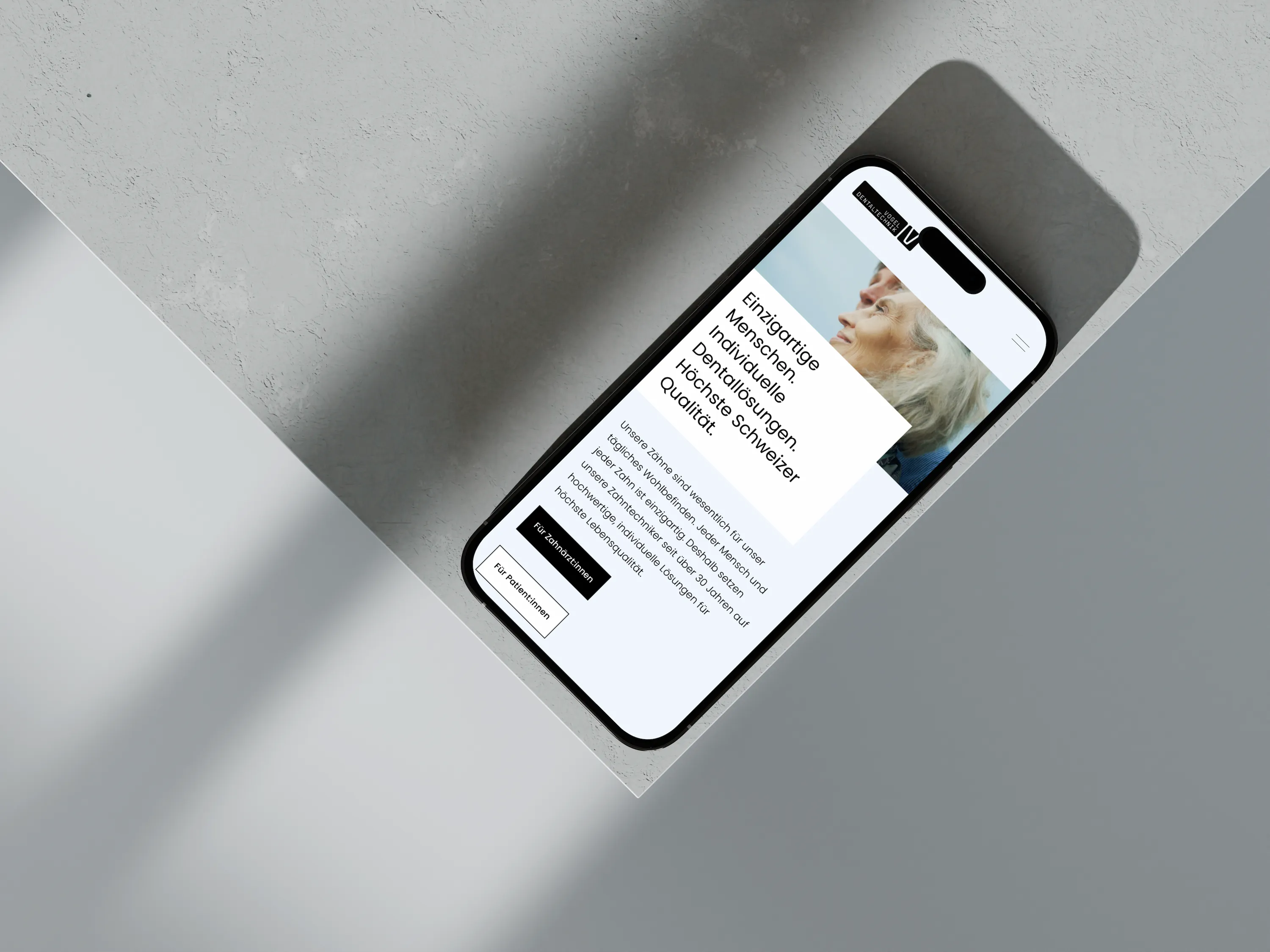
No projects published in this industry yet.
What a great dental website delivers
Patients google before every first appointment — and decide in under 30 seconds whether to call. Hygiene, competence and modernity must read out of every pixel without falling into the stock-photo trap. The market is tightening: ~5,500 practising dentists in Switzerland, +37% since 2009 — Zurich, Geneva and Lausanne quarters are visibly over-supplied. Being found there demands more than "we are friendly and competent".
Three factors decide between a site that books appointments and one that just exists: real photos of practice and team (no generic smile), clear treatment explanations without jargon, and online appointment booking — over 60% of first enquiries arrive evenings or weekends when reception is closed.
Treatment pages as SEO foundation — not as a single "services" page
A typical Swiss dental site has 5-8 pages. Competitive practices have 30-40 — one per treatment, with explanation, process, duration, cost range and FAQ. DACH-region studies show ~78% of practices treat "services" as one collected page. That is exactly where the long-tail SEO advantage lives: "root canal Zurich Seefeld", "adult orthodontics Bern", "implant cost Basel" — three searches, three pages, three patients.
Take dental anxiety seriously — UX as a trust lever
Around 20% of adults in the DACH region have pronounced dental anxiety. They decide differently: they look for calm imagery, clear sedation options (twilight sedation, nitrous oxide), no hard "Book now" buttons. A dedicated anxiety-patient page with soft wording ("Write to us — no pressure"), a short practice video and clear information on pain-managed treatment converts the group that would otherwise quietly close the tab.
Hyperlocal SEO at the quarter level
In Swiss cities "dentist Zurich" is no longer enough. Appearing in the Google Maps 3-Pack (which captures ~50-60% of all local clicks) requires quarter-depth: Zurich districts 1-12 (Seefeld, Wiedikon, Oerlikon), Bern Bümpliz/Länggasse, Basel Gundeldingen/Riehen, Geneva Plainpalais/Eaux-Vives, Lausanne Ouchy. Each quarter is its own long-tail search — and each practice in the quarter is a competitor.
Local SEO is mandatory: well-maintained Google Business Profile with reviews, location-bound long-tail keywords, Dentist structured data (Schema.org). B2B dental labs additionally need a referrer area with material catalogue, order forms and lead-time tracker.
5 levers for a conversion-strong practice website
What makes patients convert on your site — from projects with Swiss dentists and dental labs:
- Photo shoot in the practice, not stock photos: Your rooms, your equipment, your team. Authentic photos double dwell time and triple enquiry rate.
- One page per treatment (not one collected "services" page): Around 78% of practices hide everything under "services". Giving implantology, root canal, bleaching, orthodontics, prophylaxis each their own URL wins 5-10× more long-tail searches — and every one converts on its own.
- Treatments as patient stories: "How we approach a root canal" beats a list of clinical terms. Step by step, with photos, without anxiety triggers.
- Anxiety-patient UX block with sedation options: ~20% of adults are anxiety patients. A dedicated page with calm imagery, soft wording ("write to us"), twilight sedation / nitrous oxide explainer and a short practice video reaches the group that otherwise quietly closes the tab.
- 24/7 online booking: OneDoc (~80,000 bookings/month in CH), Doctena, eAppointment or custom — whichever, as long as there is no phone friction. Cuts front-desk load by 30%+.
- Active review strategy: Google reviews are the strongest local SEO lever. An automatic review request 24h after the visit doubles the response rate — and feeds the 3-Pack.
- Hyperlocal SEO at the quarter level: Instead of only "dentist Zurich", go quarter-deep (Seefeld, Wiedikon, Bümpliz, Gundeldingen). The Google Maps 3-Pack captures 50-60% of local clicks — quarter keywords plus a maintained business profile get you in.
- Referrer area for dental labs: B2B dental needs login areas with material catalogue, order forms and lead-time tracker. Sets you apart from standard labs.
What does a dentist website cost in Switzerland?
A professional practice site starts at CHF 4,500 — including photo shoot, custom design, online booking and local SEO.
Typical project investments:
- Solo practice (5-8 pages, photo shoot, booking): from CHF 4,500
- Group practice (10-15 pages, team, specialties): CHF 7,500–11,000
- Dental lab with referrer area and material catalogue: from CHF 6,500
Fixed price before project start.
The Swiss dental market in numbers
Verified Swiss figures that anchor web design decisions for practices and labs:
~5,500
- Practising dentists in Switzerland (BAG/Medical professions registry 2024)
+37%
- Growth in dentist density since 2009 — concentrated in Zurich, Vaud, Geneva cantons (BAG)
~80,000
- Online bookings per month through OneDoc, the leading CH platform (OneDoc / ifas-expo.ch)
~20%
- Share of adults with pronounced dental anxiety (DACH average) (DACH surveys)
50-60%
- Share of local clicks captured by the Google Maps 3-Pack (bookedoutdentist.de 2026)
Local visibility — city, quarter and specialty
In Swiss cities the winner is not who ranks for "dentist Zurich" — but who appears in the Google Maps 3-Pack for "dentist Seefeld". Hyperlocal SEO means one long-tail depth per quarter, and one URL per treatment.
Zurich — districts 1 to 12
Zurich is the densest dental market in Switzerland. To become visible in District 1 (Old Town), District 4 (Aussersihl/Langstrasse), District 6 (Oberstrass/Unterstrass), District 7 (Hottingen/Witikon), District 8 (Seefeld/Riesbach), District 10 (Wipkingen/Höngg) or District 11 (Oerlikon/Affoltern), the quarter must appear in H1, title tag and address schema.
Bern — Bümpliz, Länggasse, Breitenrain
Bern is more heterogeneous: Bümpliz and Bethlehem in the west, Länggasse and Lorraine in the north, Breitenrain and Wankdorf in the east, Wabern and Köniz at the city limits. Long-tail searches like "dentist Bern Bümpliz" or "orthodontist Bern Länggasse" have lower volume — but also much lower competition.
Basel and Riehen
Basel-Stadt splits SEO-relevant into Grossbasel (city centre, Gundeldingen), Kleinbasel (Matthäus, Klybeck, Rosental) and the suburbs Riehen and Bettingen. Riehen in particular attracts families and commuters — a dedicated location page pays off.
Geneva, Lausanne, Lucerne, St. Gallen
Geneva (Plainpalais, Eaux-Vives, Pâquis, Carouge) and Lausanne (Ouchy, Flon, Chailly) need French long-tail variants — "dentiste Genève Eaux-Vives", "orthodontiste Lausanne". Lucerne (Old Town, Tribschen, Littau, Kriens) and St. Gallen (city centre, Bruggen, Rotmonten) are smaller but similarly structured: name the quarter, gather local reviews, keep the Google Maps profile clean.
Implantology — the high-price specialty
Implants cost CHF 2,950-5,000 per tooth — research intensity is correspondingly high. A dedicated implantology page with cost range, material options (titanium vs. ceramic), bone grafting explainer and a FAQ on duration and pain ranks for "implant cost Switzerland", "dental implant Zurich", "implantology Bern".
Orthodontics — aligners and adults
The adult market for orthodontics (Invisalign and other aligners) is growing fast. "Adult orthodontics Zurich", "Invisalign Bern", "invisible braces Basel" are independent long-tail searches — best served by a dedicated aligner page separate from classic paediatric orthodontics.
Root canal, bleaching, prophylaxis, periodontology
Endodontics / root canal is the anxiety-loaded treatment — patients mostly google when the pain has already arrived. Bleaching and professional cleaning are repeat-purchase drivers. Periodontology is massively under-served — building dedicated pages here wins a long-tail niche with high conversion.
Emergency dentist — the highest-intent search
"Emergency dentist Zurich", "weekend dentist Bern", "dentist open today" are the highest intent level — ranking here and showing a clear emergency number above the fold wins directly. An emergency page with opening hours, weekend service and a first-aid FAQ is mandatory for any practice with an on-call service.
What a dental website respects legally and ethically
Swiss dental websites operate in a tight legal and professional frame. Noevu knows it and builds compliant — many competitors do not.
HMG / AWV — advertising of medical services
The Therapeutic Products Act (HMG, SR 812.21) and the Advertising of Medicinal Products Ordinance (AWV) limit advertising for medicinal products. Dental practices are not pharma, but advertising claims must stay objective and factual. No superlatives ("best practice in Zurich"), no unverified success rates, no clinical before/after images without factual context.
FMH professional rules Art. 18 — advertising guidelines
While dentists are SSO members and not FMH, the analogous standard applies: advertising must be factual, not misleading and not disparaging. Testimonials about subjective experience ("I had no pain") are allowed — claims of clinical superiority are not.
revFADP — data protection for contact forms and booking
The revised Federal Act on Data Protection (revFADP, in force Sept 2023) requires a correct privacy notice, consent on tracking (GA4, pixels), TLS encryption and ideally hosting in CH or EU. Patient data in a contact form is specially worthy of protection — US cloud services for enquiry data are problematic.
KVG / health insurance billing scope
The compulsory basic insurance (KVG/LAMal) covers dental treatment only in exceptional cases (accident, systemic disease). A site that explains this transparently — what is covered, what is private pay, how the upfront insurance clarification works — reduces bounce and distrust. Cost anchors like "implant from CHF 2,950" belong visibly on the treatment page.
Show MEBEKO registration and SSO membership
Listing in the medical professions registry (BAG/MEBEKO) is a precondition for practising — the listing and SSO membership (with a link to the SSO dentist directory) are strong trust signals. Specialist titles (orthodontics, oral surgery, periodontology) belong in the team profiles, not just in the CV.
Six mistakes we see on 8 of 10 dental websites
Before talking new pages — these six blunders cost Swiss practices first enquiries every day:
- Stock-photo smile instead of the real team: The generic model with perfect teeth signals: "we are hiding." Patients click away before they read the address. A photo shoot is a one-time cost — and the difference shows for years.
- One single "services" page instead of individual treatment pages: 78% of practices under-serve here. Every treatment deserves its own URL with its own H1, explanation, cost range, FAQ. Otherwise competitors rank for "implant cost Zurich" — and you do not.
- No mobile booking — phone number hidden in the footer: 76% of dental searches happen on smartphone, 51% of practices have the phone number not above the fold. Booking button and phone belong visibly in the mobile header.
- Missing Google reviews integration: 77% of practices do not pull their reviews onto the site. They give up the strongest social trust signal — and a direct lever on the Google Maps 3-Pack.
- Anxiety triggers in the copy: "painless", "drill", "needle": Reaching anxiety patients means avoiding the trigger words — and instead describing the control options: "you set the pace", "we explain every step in advance". Small wording, big effect.
- Jargon without explanation — endodontics, periodontology, approximal caries: Patients google symptoms ("tooth hurts when biting"), not technical terms. Treatment pages need patient language as H1 and the technical term as subtitle — not the other way round.
More reading on practice marketing

Book your free consultation:
Vielen Dank! Wir melden uns in Kürze.
Common questions about dental web design
How do I win new patients on the website?
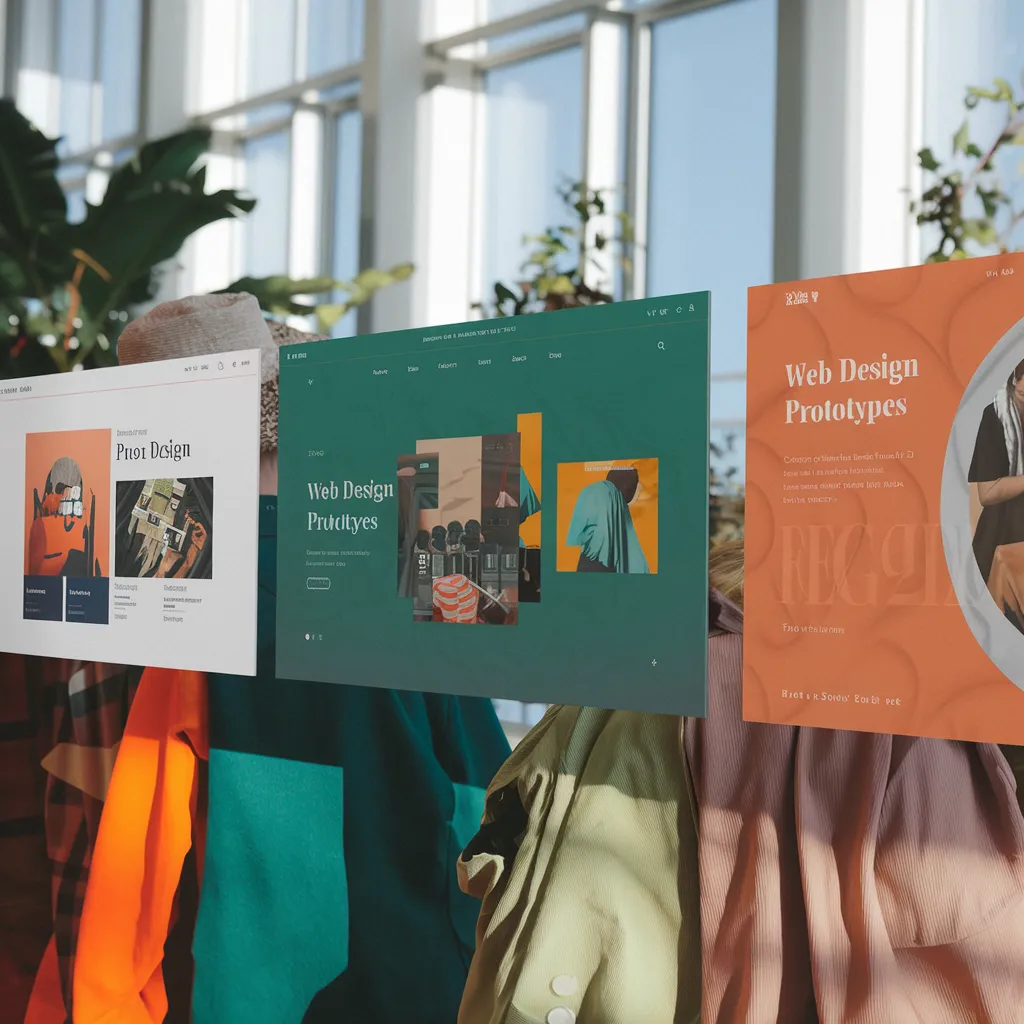
Three levers: 1) real photos of practice and team (no stock-photo smiles), 2) clear treatment explanations without jargon, 3) visible reviews + online appointment booking. Dwell time and enquiries climb 2-3× with authentic imagery — see Vogel Dental Technology.
Which online booking platform fits my practice?
Three dominate the Swiss market: OneDoc (leading, ~80,000 bookings/month, ~250,000 patients, integrated with 30+ practice systems) — strong for broad visibility. Doctena (DACH-strong, good for group and multi-site practices). eAppointment (older, still common, cheaper). Integration with your practice software (Axosoft, Dampsoft etc.) is the deciding factor — Noevu reviews the stack before recommending and integrates the chosen platform cleanly into the site.
How many treatment pages does my practice actually need?
At least one per main treatment — typically 15-25. Implantology, orthodontics (with aligner sub-page), root canal, bleaching, prophylaxis/scaling, periodontology, oral surgery, emergency dentistry, anxiety patients, paediatric, prosthetics/crowns, each with its own H1, explanation, process, cost range and FAQ. Around 78% of practices hide everything under "services" — exactly where the long-tail SEO advantage lives.
How do I win anxiety patients through the website?
~20% of adults have pronounced dental anxiety — and decide differently. A dedicated anxiety page with calm imagery (no drill close-ups), soft wording ("write to us — no pressure", not "book now"), a clear sedation explainer (twilight sedation, nitrous oxide) and a short practice video. This group does not convert on hard CTAs — it converts on visible understanding and control options.
Do I need online appointment booking?
For dental practices: yes. 60%+ of first enquiries arrive evenings/weekends. Online booking via OneDoc, Doctena, eAppointment or custom solution reduces phone load and lifts revenue. Implementation takes days and integrates with any practice software.
What does a dentist website cost in Switzerland?
A professional practice website starts at CHF 4,500 — including photo shoot, custom design, online booking and local SEO. B2B-focused dental labs run from CHF 6,500+ due to referrer area and material catalogue. Fixed price before start.
How does my practice get found on Google in my city?
Local SEO for dentists: maintain Google Business Profile with reviews, location-bound keywords at quarter level (e.g. "dentist Zurich Seefeld" instead of just "dentist Zurich"), Dentist Schema.org markup, actively gather patient reviews. The Google Maps 3-Pack captures 50-60% of local clicks — top-3 long-tail rankings realistic within 2-4 months.
How long does it take from briefing to launch?
Typical Swiss SME projects go live in 6-12 weeks. Workshop and concept (2-3 weeks), design prototyping (2-3 weeks), implementation and content (2-4 weeks), QA and launch (1-2 weeks). Larger projects with multilingual scope, shop or government integration need 3-6 months. You receive a binding roadmap with milestones before start.
Can I edit the website myself after launch?
Yes. By default Noevu ships a website you can maintain yourself — usually on Squarespace (drag-and-drop) or a Headless CMS with visual editor (Sanity Studio, Payload, Strapi). At launch you receive video training and a written guide. If you would rather not invest time, Noevu can maintain the site under a service plan.
What happens after go-live? Maintenance, hosting, support?
Noevu offers a service plan from CHF 90/month — includes hosting (Vercel + Cloudflare CDN), automatic backups, security updates, performance monitoring and 2 support hours monthly. Without a plan the site keeps running — you keep full access and can switch providers any time (no vendor lock-in).
Does Noevu translate the website into multiple languages?
Yes. Multilingual sites in DE/FR/IT/EN (also PT, ES, AR, TR on request) are part of the standard repertoire. We use structured translation workflows with correct hreflang tags, locale-specific imagery and clean SEO per language. Translations can be done by your team or by Noevu via professional translators.
Who owns the website, code and content?
You do. Fully. Noevu delivers code, design files and content for unrestricted reuse — no licensing model, no "platform lock-in". If you ever switch agencies, everything goes with you. Hosting, domain and CMS accounts are in your name. This promise is part of every quote.