

The Best WordPress Alternatives in 2026 and Why Your CMS Choice Matters Now
WordPress is considered the default solution — but in 2026, the landscape has changed fundamentally. A public legal dispute between Automattic and WP Engine, over 11,000 new security vulnerabilities in the plugin ecosystem, and the first measurable market share loss in WordPress's history raise the question anew: is WordPress still the right choice for a Swiss SME?
This article delivers an honest, practical assessment — not a “top-10 list”, but a structured decision aid. Drawing on over 25 years of experience with WordPress, Squarespace, and modern CMS alternatives, this guide shows what is actually delivered for the investment.
On one side stands WordPress, the undisputed market leader and the proverbial “Swiss Army Knife” of the internet. Its greatest strength is its flexibility — as open-source software, you can theoretically add any conceivable function through plugins. But this freedom comes at a price, and it often only becomes apparent once you're in day-to-day operation.
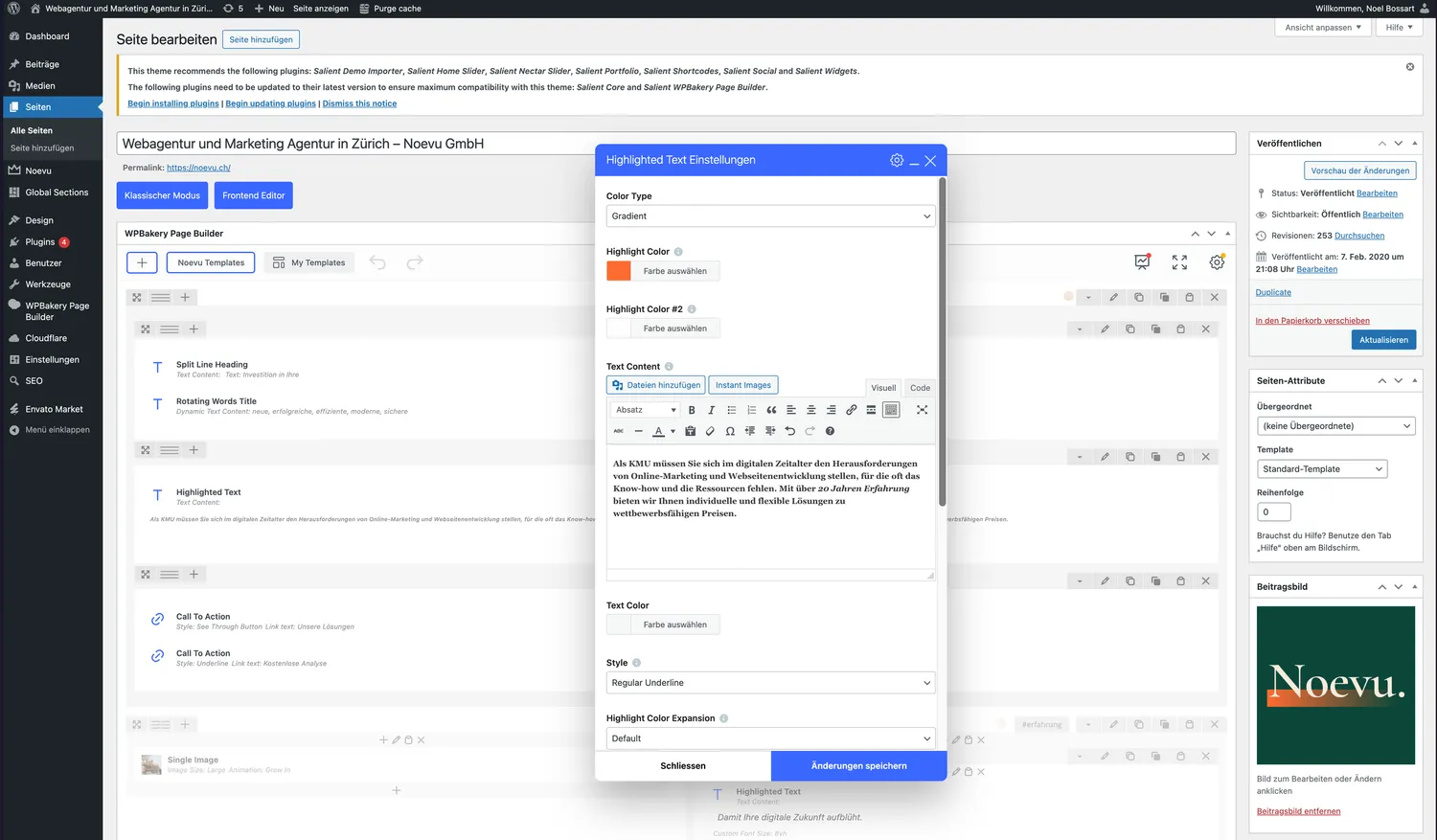
As a popular alternative, Squarespace positions itself as an integrated all-in-one solution as a service (SaaS) — not software you download, but a fully managed platform. Design, hosting, security, and marketing features are all included in a single monthly subscription. Alongside it, 2026 has seen further strong alternatives establish themselves: Webflow for design professionals, Wix Studio with AI integration, and Framer for rapid marketing pages.
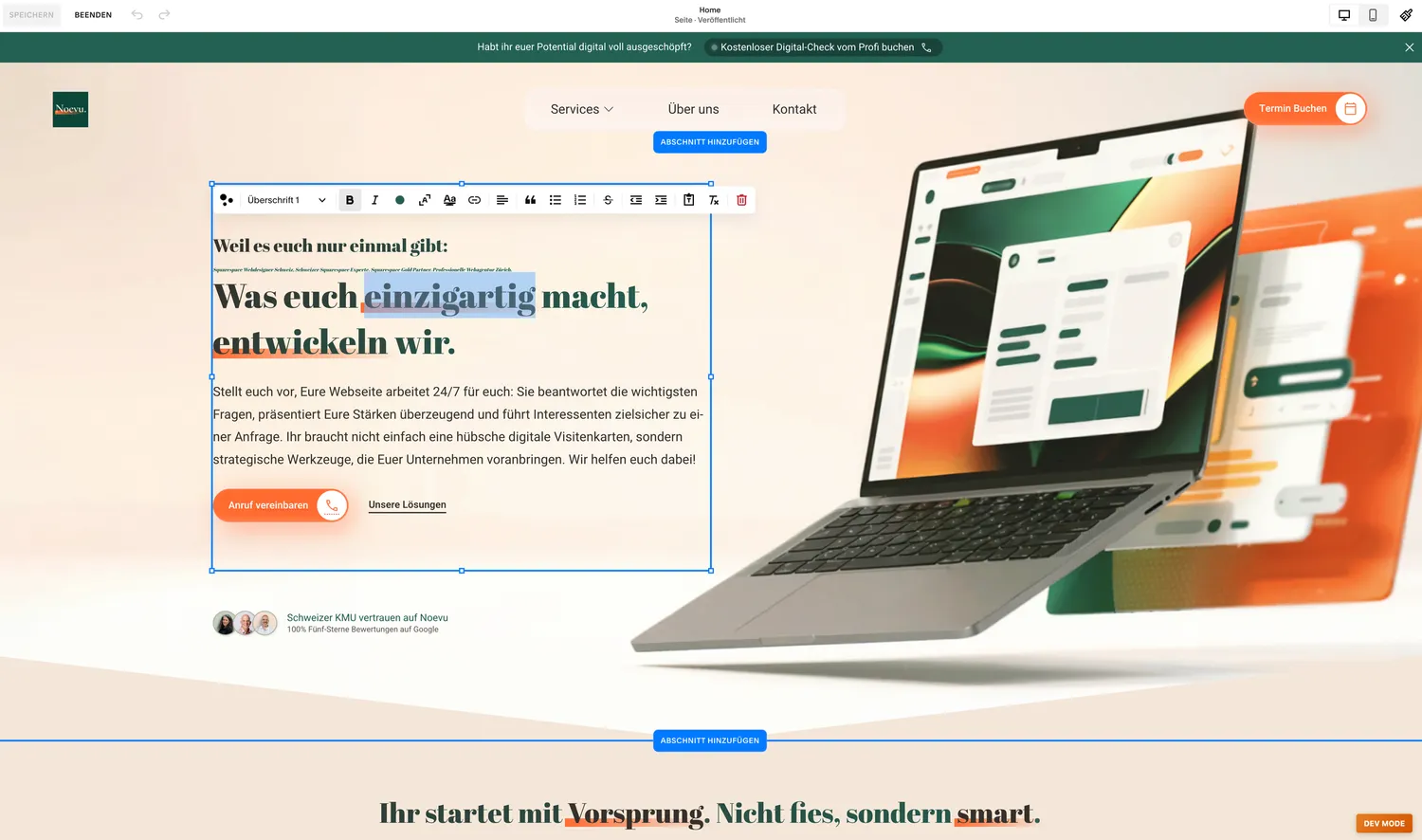
The interactive CMS Check for Swiss SMEs guides through the decisive strategic questions and identifies the right fit.
WordPress in Crisis — What Happened in 2025/26
WordPress was for years the safe default — not necessarily the best choice, but the most familiar one. In 2025, that picture changed fundamentally. Three developments should give every SME pause if they run their website on WordPress or are considering switching to it.
The legal dispute: In autumn 2024, a conflict escalated between Automattic (the company behind WordPress.com and WordPress.org) and the major hosting provider WP Engine. Matt Mullenweg, CEO of Automattic and co-founder of WordPress, publicly called WP Engine a “cancer on WordPress” and blocked their access to WordPress.org resources — affecting millions of websites. A US court ordered access to be restored; the legal dispute continues.
The security situation: In 2025, 11,334 new vulnerabilities were discovered in the WordPress ecosystem — a 42% increase on the previous year. 96% of those vulnerabilities came from third-party plugins. WordPress sites were attacked on average every 32 minutes. Particularly alarming: 52% of affected plugin developers did not patch the vulnerabilities before public disclosure.
The market share: For the first time in its history, WordPress recorded a measurable decline — from 43.6% to 42.6% of all websites worldwide. At the same time, Shopify, Wix, and specialised platforms grew significantly.
The Cost Question: WordPress vs. Squarespace 2026
The biggest misconception when choosing a web platform is looking only at the starting price. The real story is told by ongoing costs — both the visible and the invisible. This is where the greatest difference between WordPress and an all-in-one platform like Squarespace becomes apparent.
Squarespace completely overhauled its plan structure in late 2024. Instead of Personal/Business/Commerce, there are now four clearly tiered plans: Basic ($16/mo.), Core ($23/mo.), Plus ($39/mo.), and Advanced ($99/mo.). E-commerce is now available on all plans — a significant step forward compared to 2025.
Included in the Squarespace Core plan
- Fully managed premium cloud hosting — no configuration required
- SSL security certificate — standard and free
- Mobile-optimised design templates with the Fluid Engine editor
- Blueprint AI for website creation and AI Visibility for SEO
- E-commerce features on all plans
- 24/7 customer support and a free domain in the first year
WordPress itself is free as software — the platform's greatest marketing argument and, at the same time, its greatest misconception. A professional, secure WordPress website requires a whole range of paid extensions:
WordPress costs in detail
- Hosting at Hostpoint, Cyon, or Green.ch: CHF 15–30/month
- Premium theme/page builder: from $59–$99/year (Elementor, Divi)
- Security plugin (Wordfence Premium): approx. $149/year — essential, not optional
- Performance plugin (WP Rocket): approx. $59/year
- SEO plugin (Yoast SEO Premium): approx. $99/year
- Multilingual support (WPML): approx. $99/year for the Swiss market
- Maintenance and time: the largest and most frequently overlooked cost factor
The Cost Comparison: WordPress vs. Squarespace
This table makes the abstract “hidden costs” concrete and shows what you actually pay for comparable performance. Squarespace prices are based on the Core plan ($23/mo.), which is the right choice for most SMEs.
| Squarespace Core | WordPress (Self-hosted) | |
|---|---|---|
| Platform costs | $23/mo. (annual) | Free (software) |
| Hosting (Switzerland) | Included | CHF 15–30/mo. |
| Domain (.ch) | 1st year free | CHF 15–20/year |
| Design (theme) | Included | $59–$99/year |
| Forms | Included | $49–$99/year |
| Basic e-commerce | Included | WooCommerce + Extensions |
| AI features | Blueprint AI, AI Visibility | Jetpack AI: $10/mo. |
| Multilingual support | Weglot from $15/mo. | WPML approx. $99/year |
| Page builder | Fluid Engine (included) | $59–$99/year |
| Security (SSL, firewall) | Included | $149/year (Wordfence) |
| Performance (CDN) | Included | $59/year (WP Rocket) |
| SEO tools | Included | $99/year (Yoast Premium) |
| Maintenance effort | None | 2–5 hrs/month |
| Total costs in year 1 | approx. CHF 300–500 | approx. CHF 800–1,500+ |
WordPress software is free; total costs arise from necessary extensions. The Squarespace Core plan includes almost everything an SME needs. Prices as of March 2026.
The numbers tell a clear story. The initially “free” path with WordPress turns out to be a complex, unpredictable, and significantly more expensive undertaking. The flat rate at Squarespace covers almost everything an SME needs — including the AI features newly integrated in 2026.
Simplicity & AI: Squarespace in 2026
For business owners, time is the scarcest resource. Choosing a web platform is therefore also a decision about how you use that resource. Do you want to become a part-time IT administrator, or focus on what you do best?
Squarespace was built from the ground up for intuitive use. The drag-and-drop editor “Fluid Engine” lets you design content visually and see changes in real time. But the real leap forward came in 2025/26 with the new AI features.
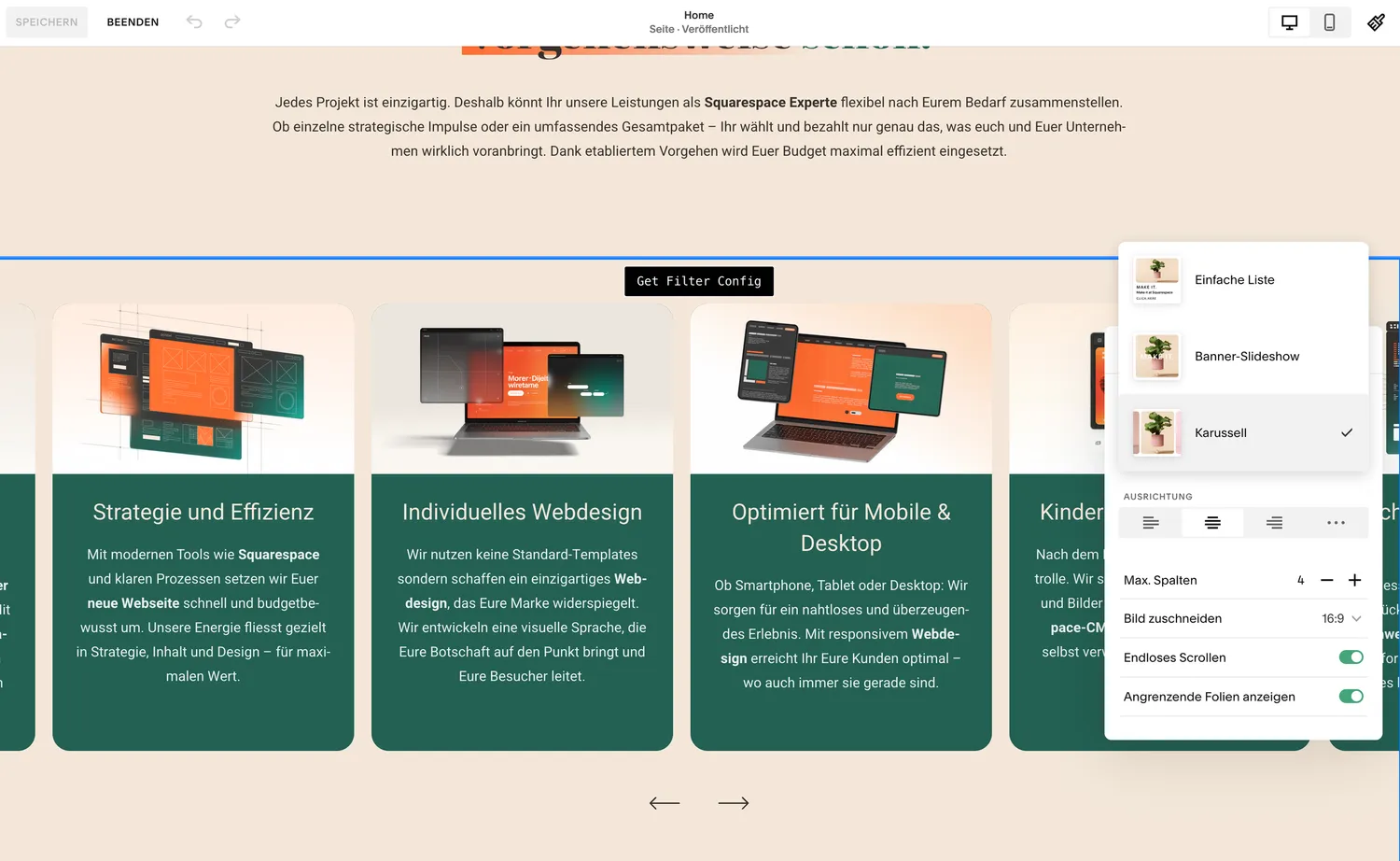
Blueprint AI creates a complete website draft based on just a few inputs — including structure, design, and copy. AI Visibility shows you how your content appears in AI-generated answers (such as ChatGPT) and helps you optimise your visibility in the new era of AI search. On top of that, Block Animations deliver more dynamic pages and a search function that is 20 times faster.
In October 2024, Squarespace was acquired by private equity firm Permira for $7.2 billion. What might initially sound like a risk factor is, in practice, a stability signal: founder Anthony Casalena remains CEO, and the investment enables substantial further development — as the AI push clearly demonstrates.

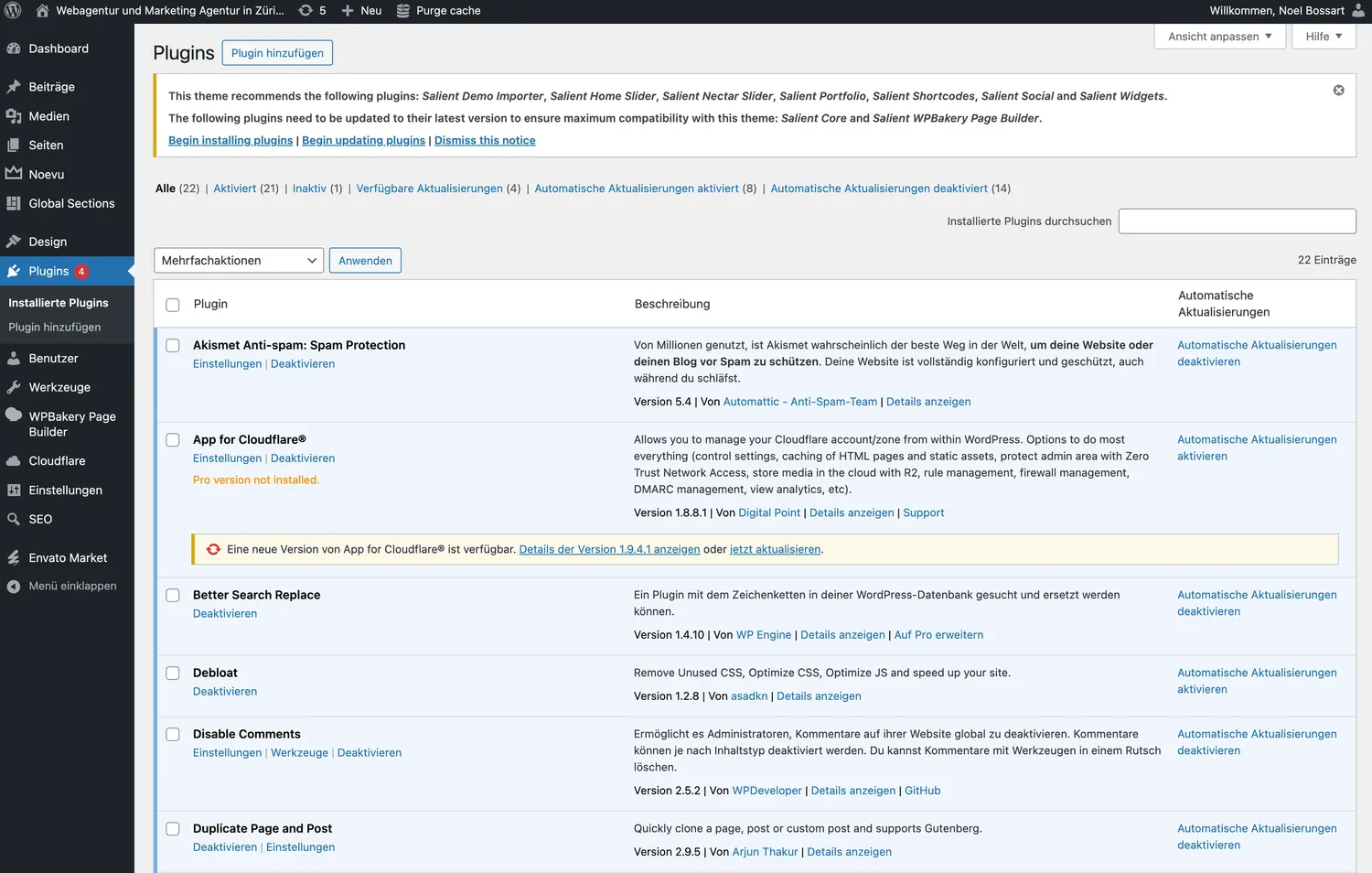
WordPress, by contrast, has a steeper learning curve. Dashboard, themes, plugins, widgets — the fundamental concepts take time to master, and most SME managers simply don't have that time. The biggest time trap is maintenance: the ecosystem of core, theme, and dozens of plugins must be constantly updated. Every update carries the risk of plugin conflicts. Troubleshooting can take hours or even days.
A real-world example: the website fincamariposas.com for a holiday resort in Tenerife shows the value of simplicity. The owner prefers to spend time with guests, not plugin updates. Squarespace makes that possible — content, images and bookings are managed independently, without any technical help.
Security — The Strongest Argument Against WordPress
In a digitalised world, the security of your website is non-negotiable. A security incident can not only lead to financial losses — it can also destroy the trust your customers have built up over years. And this is precisely where the greatest risk lies with WordPress in 2026.
The figures are alarming: 11,334 new vulnerabilities in the WordPress ecosystem in 2025 alone. 43% of them are exploitable without any authentication — an attacker needs neither a password nor existing access. Cross-site scripting (XSS) accounts for 53% of all new vulnerabilities and allows malicious code to be injected via forms or comments.
WordPress security situation 2025/26
- 11,334 new vulnerabilities in 2025 (+42% vs. 2024)
- 96% of successful attacks via third-party plugins
- 52% of plugin developers did not patch before public disclosure
- Attacks on average every 32 minutes
- 43% of vulnerabilities exploitable without authentication
- Brute-force attacks via AI botnets up 45%
Squarespace is a closed, centrally managed system — a “walled garden”. What some perceive as a limitation is in fact your greatest security advantage: no third-party plugins, automatic background updates, SSL as standard, centrally managed infrastructure.
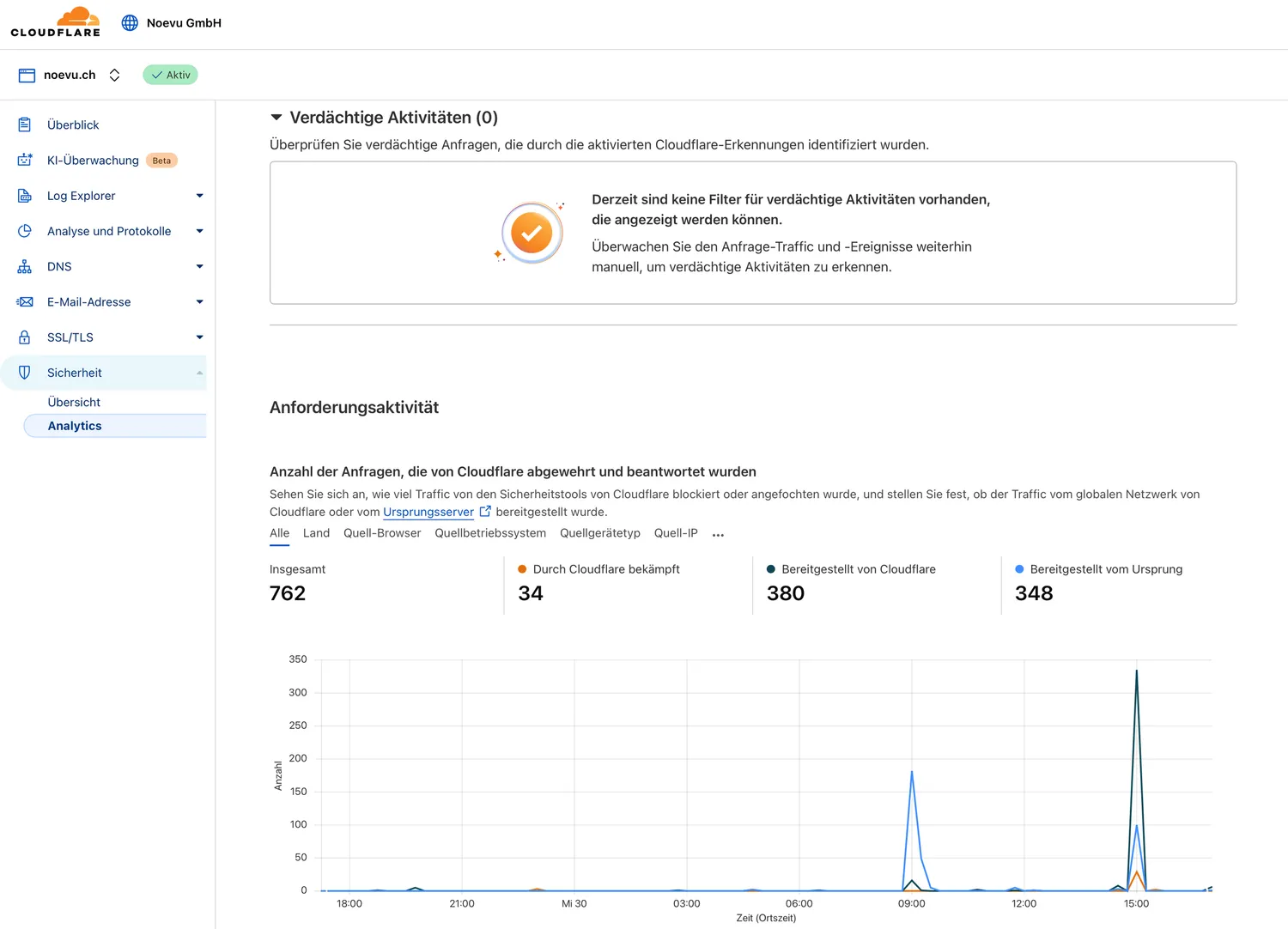
A concrete counterexample: NZZ Connect, a prominent organiser of business events, commissioned the website for the renowned Cybersecurity Seminar. The central requirement: replace a maintenance-intensive WordPress system with a modern, highly secure platform. The irony that a cybersecurity event replaced its WordPress site due to security concerns underscores the problem perfectly.

Other WordPress Alternatives at a Glance — 2026
Squarespace is the Noevu recommendation for most Swiss SMEs — but depending on the situation, another platform may be the better choice. The CMS market has diversified significantly in 2026, and it pays to know the options. One important note: there is no objectively best system — only the right fit or the wrong one.
| Squarespace | Webflow | Wix Studio | Shopify | |
|---|---|---|---|---|
| Ideal for | SMEs, service providers | Agencies, design teams | Budget SMEs, freelancers | Online shops |
| Starting from | $16/mo. | $14/mo. | $17/mo. | $39/mo. |
| AI features | Blueprint AI, AI Visibility | Limited | Harmony AI, AI SEO | Shopify Magic |
| Learning curve | Low | Medium to high | Low | Low |
| E-commerce | All plans | Limited | Yes | Core function |
| Design flexibility | Good (templates) | Very high (pixel-precise) | High (AI-assisted) | Medium (themes) |
Prices with annual billing. All platforms include global CDN hosting. As of March 2026.
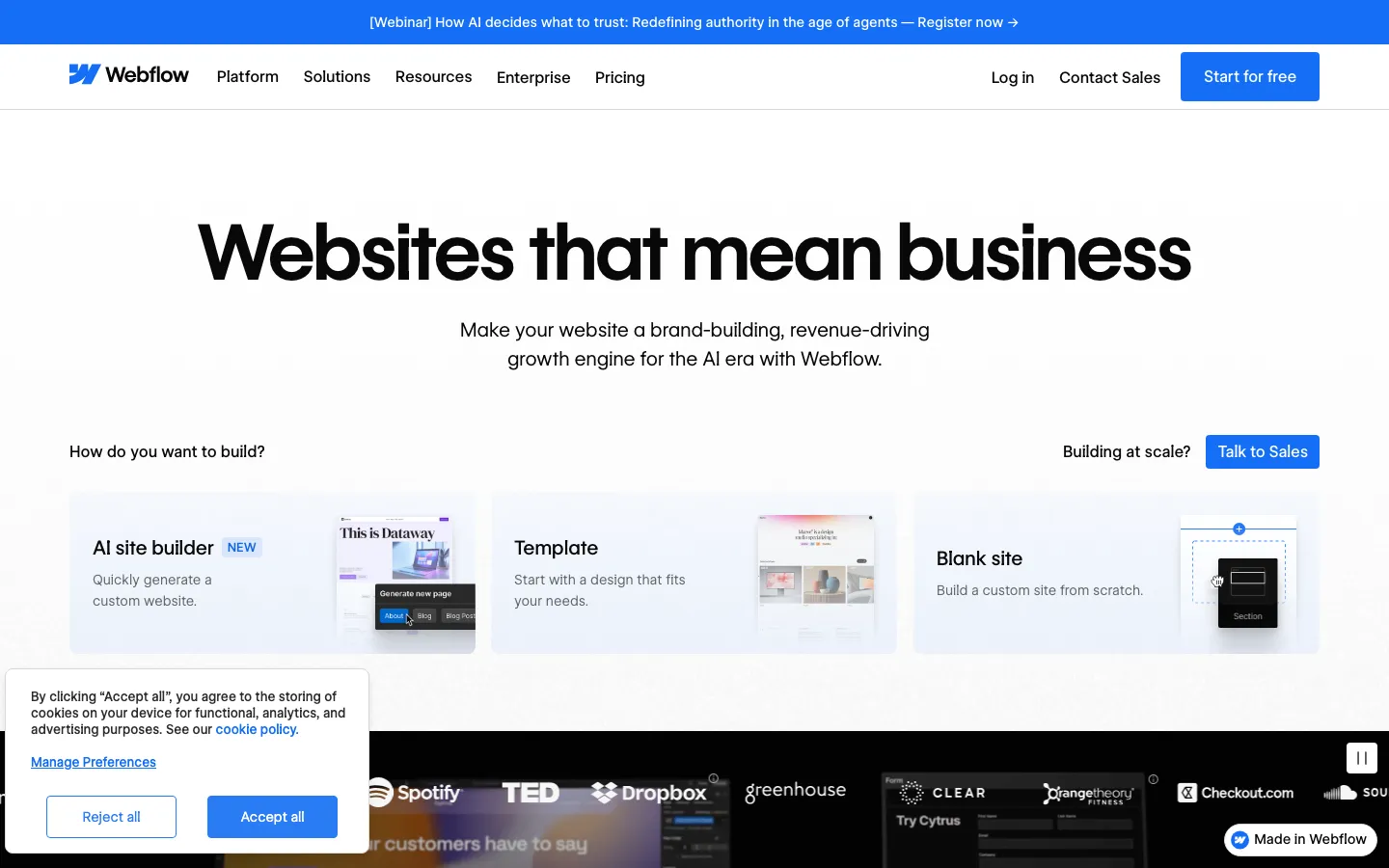
Webflow is the choice for design agencies and teams that need pixel-precise control over their layouts. With over 3.5 million websites worldwide, Webflow has established itself as a serious platform. The learning curve is steeper than Squarespace, but the creative freedom is virtually unlimited. For SMEs without an in-house design team, Webflow is typically too complex.
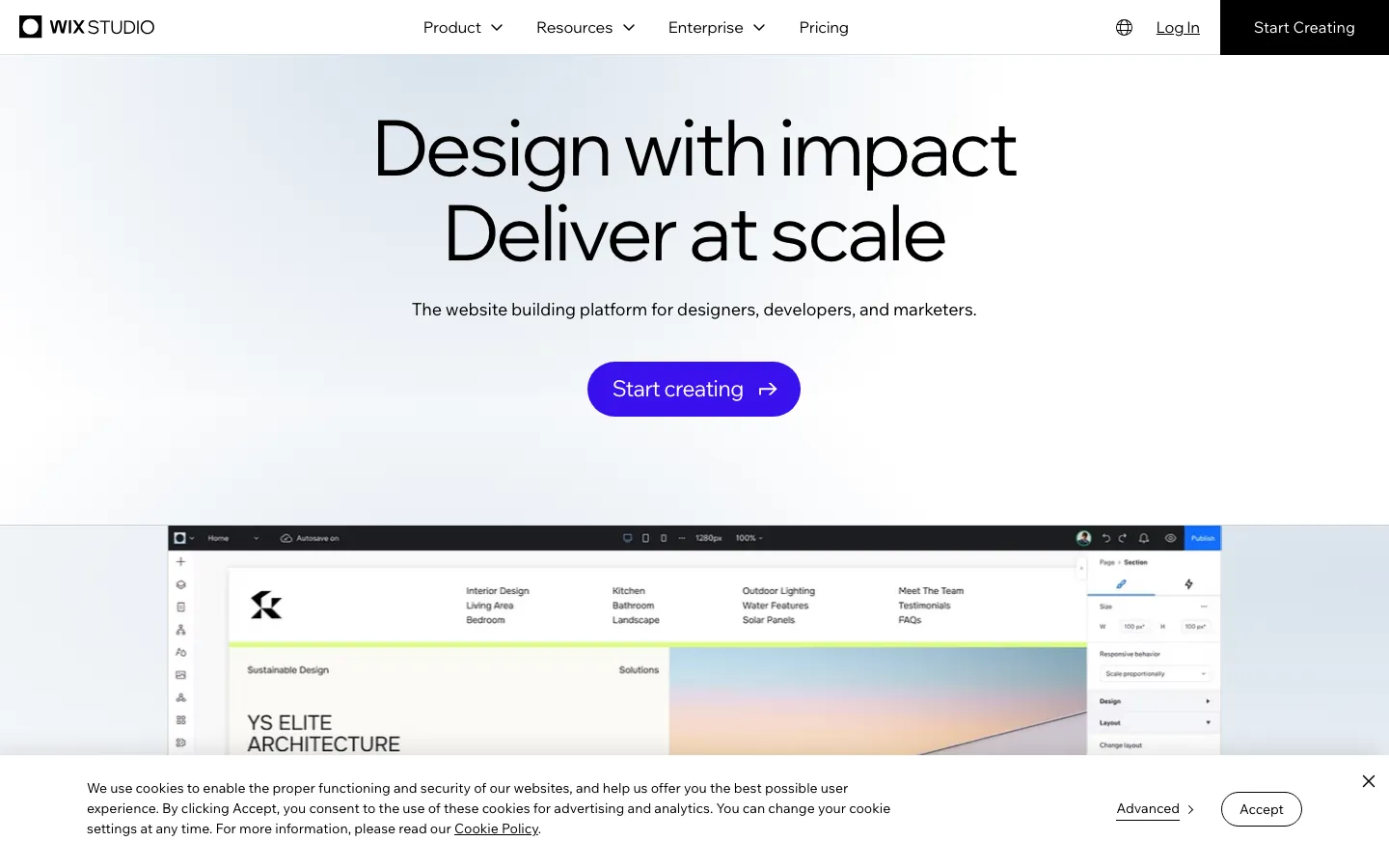
Wix Studio targets agencies and budget-conscious SMEs. The AI integration “Harmony” generates layouts automatically, and the VS Code-based editor allows professional customisations. Wix has made massive strides in the past two years and, with a 4.2% market share, is the fastest-growing platform.
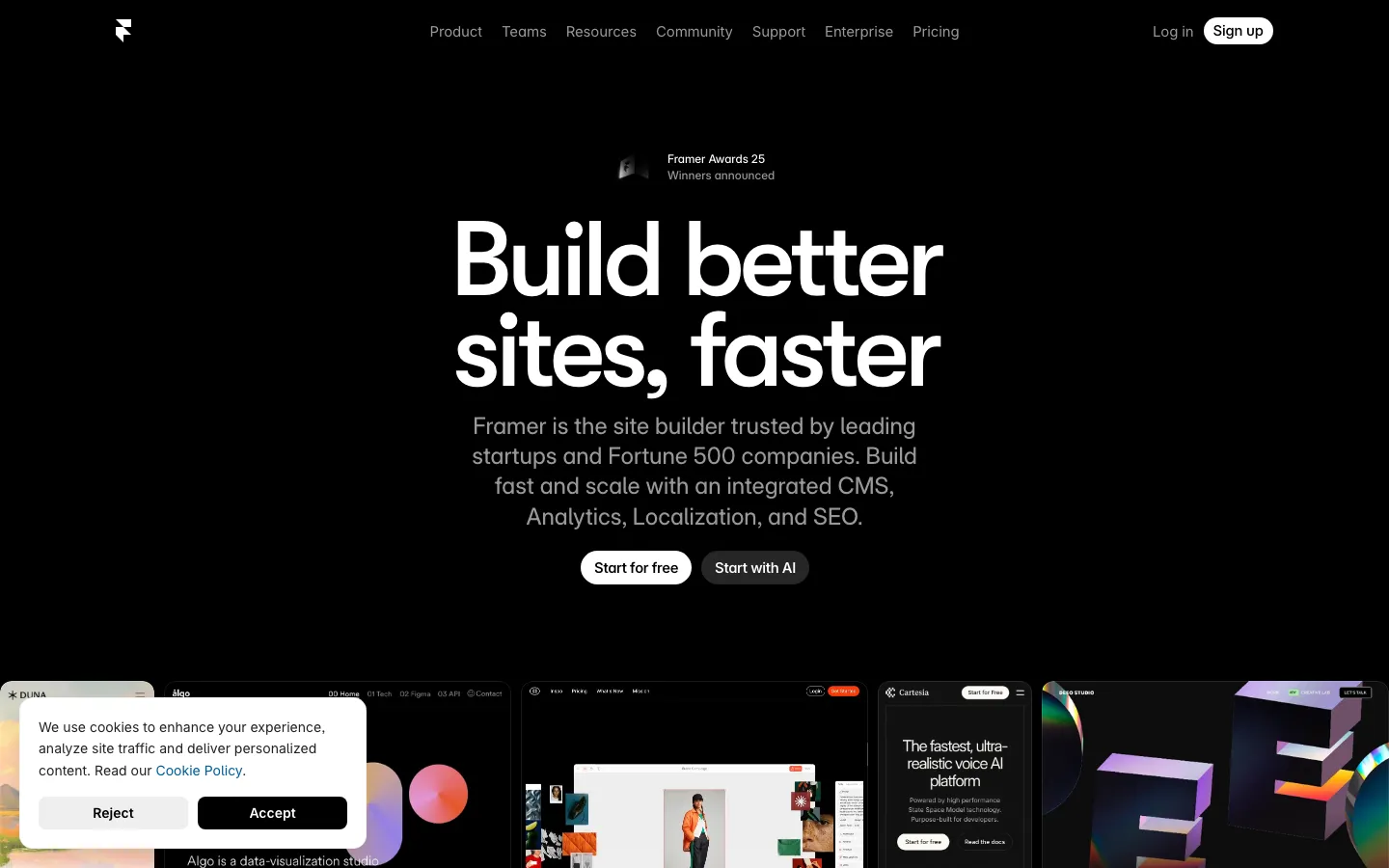
Framer has undergone an impressive evolution — from prototyping tool to fully-fledged website builder with 400% user growth. Ideal for marketing teams that want to create landing pages and campaign sites quickly. For extensive company websites, however, the CMS depth is lacking.
Two further alternatives deserve mention: Shopify for SMEs focused on e-commerce (5.1% market share), and Ghost as the best choice for pure publishing and newsletter businesses.
Which Platform is Right — and When
The right CMS decision does not depend on the platform — it depends on the situation. Rather than pushing a single solution, this decision guide is based on real experience with Swiss SMEs. The question to answer honestly: which of the following best describes the business?
Your Situation → Recommendation for Swiss SMEs
- Service providers, consultants, practices → Squarespace (all-in-one, minimal effort)
- Design agency, creative studio → Webflow (maximum design freedom)
- Budget-conscious SME, fast launch → Wix Studio (affordable entry + AI)
- Marketing team, campaign landing pages → Framer (rapid iteration)
- Online shop with product catalogue → Shopify (e-commerce core competency)
- Blog, newsletter, membership → Ghost (publishing-focused)
- Growing digital business → Headless CMS + Astro (maximum control)
For SMEs growing beyond a traditional website and wanting to publish content across multiple channels, a headless CMS may be the right choice. This approach separates content management from the frontend — enabling maximum control and performance. It requires developer resources and only makes sense once the digital ambition extends beyond a single website.
The free CMS Check for Swiss SMEs guides through the key questions and delivers a concrete recommendation.
How Noevu Sees It
Noevu made the transition — from Squarespace to a headless architecture built with Astro — not because Squarespace wasn't good enough, but because the requirements of a tech agency had outgrown a traditional website. For most SME clients, Squarespace remains the recommendation, because it offers the best ratio of quality to effort.
The role of a good agency is not to sell the most sophisticated solution, but to find the right one. In practice, that means checking first whether a simpler platform meets the requirements before recommending a more complex one. An SME with five pages and a contact form does not need a headless CMS — just as a tradesperson does not need an industrial robot.
What all successful web projects have in common is not the platform, but the strategic guidance. The right information architecture, a well-considered content strategy, and professional execution make the difference — regardless of which platform is chosen.
Conclusion for Swiss SMEs
Choosing the right web platform is not a purely technical matter — it is a strategic business decision. In 2026, the landscape has shifted: the WordPress legal dispute, the record number of security vulnerabilities, and the first-ever market share loss make the risks more tangible than ever.
WordPress still offers unmatched flexibility — but it comes with full responsibility for security, maintenance, and a fragmented plugin ecosystem. The total cost of ownership is higher and less predictable than with integrated alternatives.
Squarespace offers an all-in-one solution at predictable costs, with built-in AI features and no security risk from third-party plugins. For the majority of Swiss SMEs, it remains the strongest WordPress alternative in 2026.
Alongside it, Webflow, Wix Studio, and Framer have established themselves as serious options for specific needs. The landscape is broader than ever — which means a better chance of finding a platform that genuinely fits.
The smartest solution is not the platform alone. It is the strategic partnership between the right platform and the local expertise of a Swiss agency that understands the industry, the market, and the language. That is what Noevu delivers. When the switch is due, you can get a website built instead of patching the old one again.

A no-obligation conversation shows specifically how solutions for demanding Swiss SMEs are built — far beyond the standard.
Frequently Asked Questions
What is the better choice for Swiss SMEs in 2026?
The question is not which is better, but which suits you better. WordPress is extremely flexible, but you take on full responsibility for security, maintenance, and plugin management — in an ecosystem that recorded over 11,000 new vulnerabilities in 2025. Squarespace offers an integrated, secure all-in-one package at predictable costs. For most Swiss SMEs that want to focus on their core business, an all-in-one platform like Squarespace is the strategically smarter choice today.
Is WordPress still secure for my SME?
WordPress as core software is solid. The problem is plugins: 96% of all successful WordPress attacks in 2025 came through third-party plugins. 52% of plugin developers did not patch known vulnerabilities before public disclosure. WordPress sites were attacked on average every 32 minutes in 2025. If you run WordPress, you either need a dedicated security budget and ongoing maintenance — or you switch to a platform where security is built in at the core.
What does the WordPress legal dispute mean for website operators?
The ongoing legal dispute between Automattic (the company behind WordPress) and WP Engine has shown that the WordPress ecosystem depends more on individual decisions than many thought. Matt Mullenweg temporarily blocked access to WordPress.org resources for WP Engine customers. For SMEs, this means: WordPress's governance structure carries a concentration risk. Closed platforms like Squarespace do not have this problem.
Can you do professional SEO with Squarespace?
Yes, absolutely. The myth that Squarespace is not good for SEO is outdated. The technical foundation is excellent: loading times, security (SSL), mobile-friendliness, and clean code structure are all centrally managed. All key on-page SEO tools are directly integrated. New in 2026: With AI Visibility, you can even track how your content appears in AI-generated answers (e.g. ChatGPT).
What WordPress alternatives exist in 2026?
Beyond Squarespace (the Noevu recommendation for most SMEs), there are strong alternatives depending on the situation: Webflow for design agencies and complex layouts. Wix Studio for budget-conscious SMEs with AI support. Framer for fast landing pages and marketing campaigns. Shopify for online shops. Ghost for blogs and newsletter businesses. And headless CMS approaches (e.g. with Astro) for growing digital businesses with multi-channel requirements.
What costs should we expect?
Costs break down into one-time project costs and ongoing operating costs. Squarespace offers predictable annual fees from $16/mo. (Basic) to $99/mo. (Advanced), including hosting, security, support, and CDN. With WordPress, operating costs are variable due to premium plugins, hosting, and maintenance — and experience shows they run higher. Budget CHF 800–1,500+ in the first year for comparable performance.
Is WordPress still market leader in 2026?
WordPress powers 42.6% of all websites worldwide (March 2026) — a slight decline from 43.6% the previous year. This is the first significant market share loss in WordPress's history. At the same time, Shopify (5.1%), Wix (4.2%), and specialised platforms are growing. WordPress remains dominant, but the trend is pointing downward for the first time.