

What is a Headless CMS?
A traditional content management system like WordPress is an all-in-one package: the backend (where you manage content) and frontend (what your visitors see) are tightly coupled. Change the design and you often have to touch the entire system. Want to deliver content to an app or a second channel? It gets complicated.
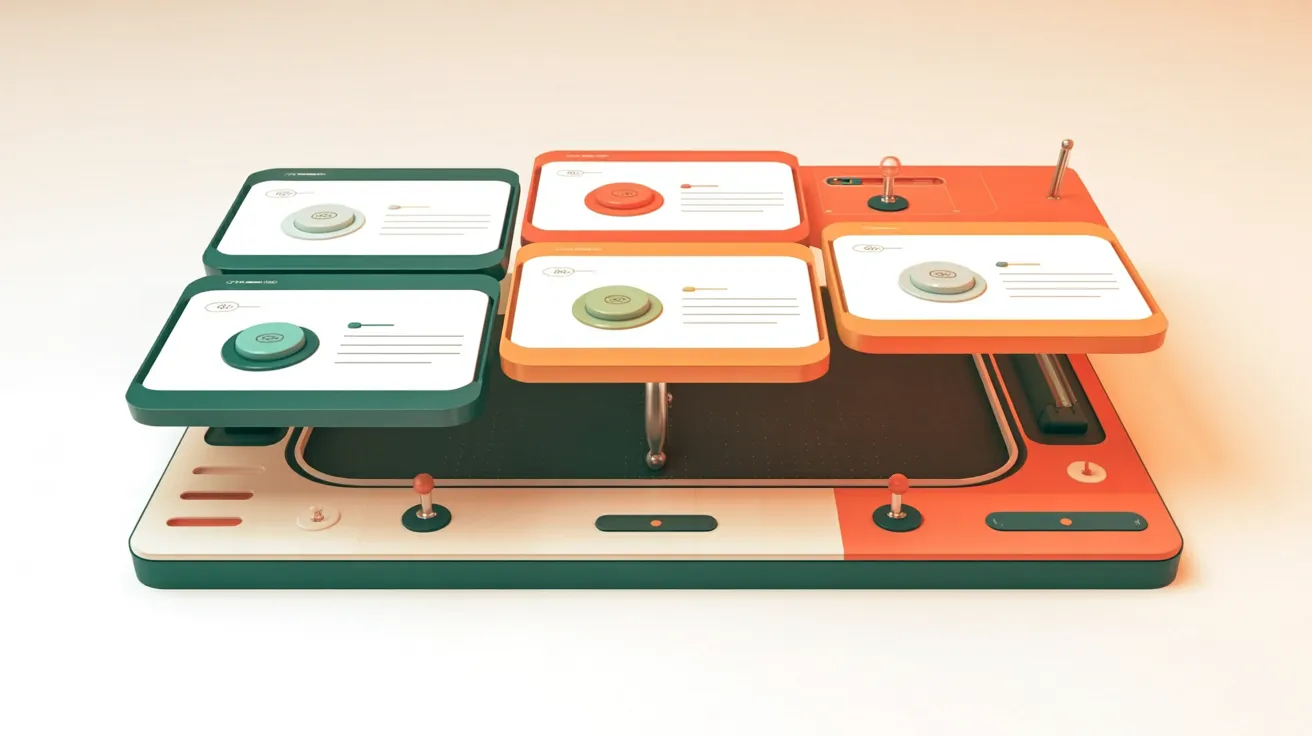
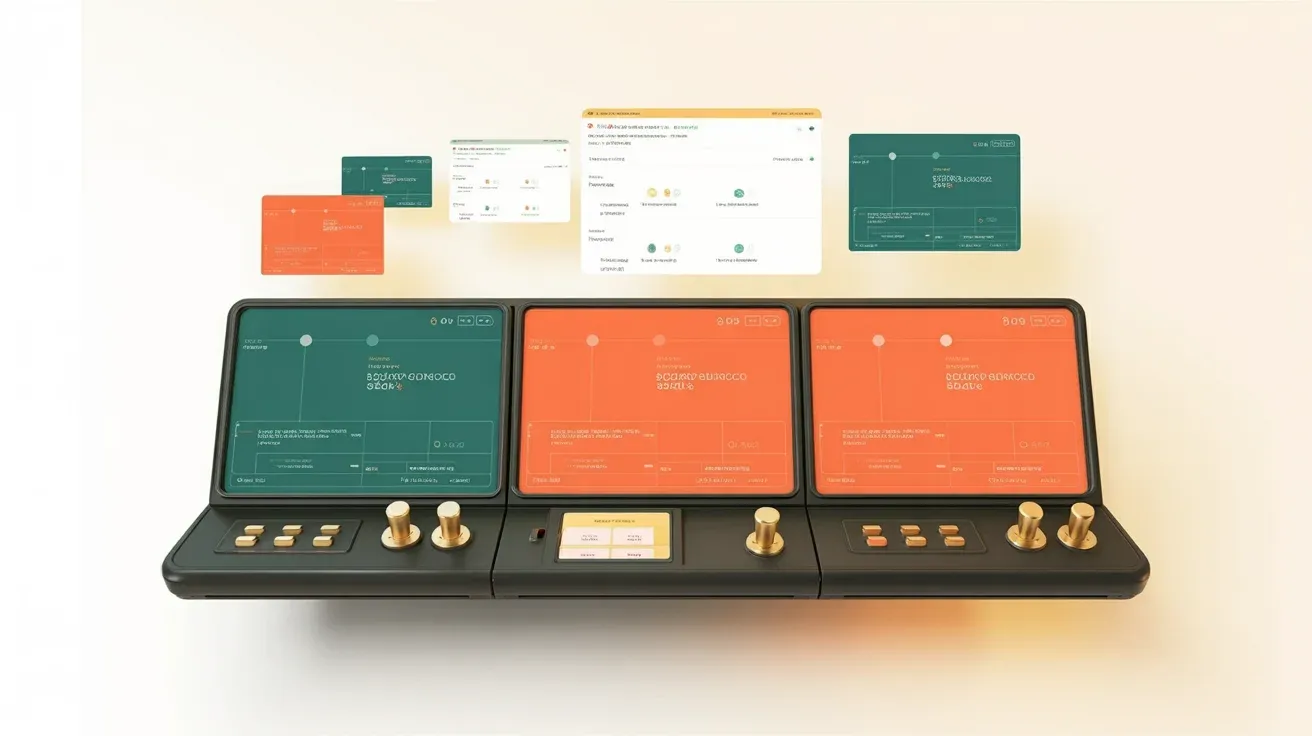
A Headless CMS breaks this connection. It manages your content and delivers it through an interface (API) — without dictating how or where it's displayed. The frontend — your website, app or any other digital channel — fetches the content via this API and can present it freely.
Think of it this way: A traditional CMS is like a restaurant that only serves at its own location. A Headless CMS is the kitchen behind it — delivering dishes to any address.
This separation of content and presentation may sound technical at first. But it has far-reaching consequences for performance, security, flexibility and the long-term costs of your digital infrastructure.
What CMS systems are there — an overview
The term «CMS» covers very different system types today. The first step is not choosing a specific product, but understanding which category fits your situation. The following overview shows the four most important types — with concrete examples and honest assessment.
| Monolithic | Website Builder | Headless CMS | Git-based | |
|---|---|---|---|---|
| Examples | WordPress, Drupal | Squarespace, Wix | Strapi, Payload, Sanity | Keystatic, Tina CMS |
| Architecture | Backend + frontend coupled | Template-based, SaaS | API-first, decoupled | Content as files in repo |
| Technical effort | Low to medium | Very low | High | Medium |
| Flexibility | Medium — plugin-dependent | Low — template-bound | High — any framework possible | High — no server needed |
| Setup costs | CHF 3,000–12,000 | from ~CHF 14/mo. | CHF 8,000–30,000 | CHF 5,000–15,000 |
| Data sovereignty | Full (self-hosted) | Limited (SaaS) | Full (self-hosted) | Full (in repo) |
For many Swiss SMEs, the decision is less a technical question than a strategic one: how much flexibility do you need today — and how much will you need in two to three years? The free CMS check gives you a structured assessment in a few minutes.
Note: Website builder and cloud service prices converted to CHF (as of March 2026).
Traditional CMS vs. Headless CMS — an honest comparison
Before diving into the details of individual platforms, it's worth taking a step back. The question isn't "headless or not?" — but "what does your business actually need?" The following comparison shows the key differences — without sugar-coating either side.
| Traditional CMS | Headless CMS | |
|---|---|---|
| Architecture | Monolithic — frontend and backend in one system | Decoupled — content via API, frontend freely selectable |
| Flexibility | Tied to the template system | Any frontend framework possible (React, Astro, Vue) |
| Performance | Often slower due to plugin overhead and database queries | Faster — static pages, CDN-optimized, no CMS bloat |
| Security | Larger attack surface through plugins and public admin panel | Smaller attack surface — API-only, admin not publicly accessible |
| Usability | Ready to use immediately, WYSIWYG editor, one-click plugins | Admin panel available, but no WYSIWYG for the final page |
| Cost (setup) | CHF 3,000–10,000 | CHF 8,000–30,000 |
| Cost (ongoing) | CHF 50–300/mo (hosting + plugins + maintenance) | CHF 20–100/mo — less ongoing maintenance |
| Multichannel | Primarily website | Website, app, digital signage — all through one API |
The bottom line: A traditional CMS is the faster, cheaper entry point. A Headless CMS is the more durable investment — if the requirements justify it. The decisive question isn't what's technically superior, but what fits the specific situation.
The WordPress alternatives comparison provides additional guidance on which CMS model fits your business.
5 concrete advantages of a Headless CMS
Technical advantages
Business advantages
These advantages aren't marketing promises — they're measurable. An e-commerce platform was able to reduce its load time from 7 to 2.8 seconds after migrating to a Headless CMS. In a market where 53% of mobile users abandon a page that takes longer than 3 seconds to load, that's a direct business impact.
When a Headless CMS is the wrong choice
Not every business needs a Headless CMS — and honest advice means saying that openly. There are situations where a traditional CMS or a website builder is the smarter investment.
A Headless CMS is probably not the right choice if:
You need a simple website with 5–10 pages that primarily serves as a digital business card. The technical overhead of a headless system isn't justified here.
Your team has no technical resources and doesn't want to hire an agency either. A Headless CMS requires developers for setup and maintenance — there's no way around that.
Your budget is under CHF 10,000 for the entire project. The higher initial costs of a headless setup only pay off for projects that are meant to grow long-term.
You exclusively operate a single website and aren't planning additional channels (app, intranet, digital signage). The biggest advantage of headless — multichannel capability — doesn't apply then.

The best Headless CMS options at a glance — 2026
The headless CMS market is growing at over 22% per year — and open-source solutions are clearly gaining the upper hand. Strapi, Payload and Directus now deliver enterprise-level features that SaaS platforms had exclusive access to just a few years ago. The decisive advantage: full data control, no vendor dependency, no licence costs.
Strapi
The all-rounder: REST and GraphQL APIs, 66,000+ GitHub stars, plugin ecosystem. Ideal for teams wanting a mature CMS with a strong community. Free self-hosted, cloud from $99/month.
Payload
The TypeScript-native: Since v3, deployable as a Next.js plugin — CMS and frontend in one app. Code-first, maximum type safety, MIT license. Free self-hosted, cloud from $35/month.
Sanity
The content operating system: real-time collaboration like Google Docs, AI Content Agent, custom query language (GROQ). Data in the EU (Belgium). Free tier available, Growth from $15/user/month.
Keystatic
The lightweight option: content as files directly in the Git repository — no server, no database, no ongoing costs. Perfect for static websites with Astro or Next.js. 100% free.
Directus stands out for its particularly well-designed admin interface: granular roles and permissions, live previews, publication workflows. Best for projects where the editorial team has high requirements for the user interface.
Payload documents 700% faster GraphQL performance than competing systems — a relevant factor for projects with high data volume or many API queries.
Beyond these, there are further options: Tina CMS offers visual editing with Git-based storage — an interesting mix for Markdown-heavy projects. Contentful (from ~CHF 300/month) and Storyblok (from ~CHF 99/month) are enterprise solutions that are oversized and too costly for most Swiss SMEs.
For a well-founded CMS choice that goes beyond a simple feature comparison, the free CMS check is the right starting point.
Open source vs. cloud — where does your data live?
For Swiss companies, data sovereignty isn't an abstract compliance exercise. Since the new Swiss Data Protection Act (nDSG, September 2023), clear rules apply: data processing abroad is permitted but requires transparency and an adequate level of protection. The EU qualifies as adequate — for particularly sensitive industries, Swiss hosting remains the safer choice.
| Self-Hosted | Cloud-based | Git-based | |
|---|---|---|---|
| Examples | Strapi, Payload | Sanity, Contentful | Keystatic, Tina |
| Data location | Freely selectable — Swiss hosting possible | Provider cloud (EU/US) | In the Git repository |
| Data sovereignty | Full control | Depends on the provider | Full control |
| nDSG compliance | Easy — data in CH | Possible with DPA — data in EU | Easy — data in repo |
| Infrastructure | Server, backups, updates required | Managed service — no effort | No server needed |
| Vendor lock-in | Minimal | Medium to high | Minimal |
| Cost | Hosting CHF 20–100/mo | Usage-based, harder to predict | Only Git hosting costs |
Lessons from practice: For most Swiss SMEs, self-hosted open source (Strapi or Payload) offers the best balance of control, cost and flexibility. Swiss hosting providers like Infomaniak or nine.ch offer professional infrastructure at fair prices — your data stays in Switzerland.
Headless CMS for Swiss SMEs — is the switch worth it?
The honest answer: it depends. A Headless CMS isn't an upgrade that's automatically better — it's a different architecture with different strengths. Whether it fits your needs comes down to five concrete criteria.
A Headless CMS is worth it if...
- You need content on more than one channel (website + app, newsletter, digital signage)
- Performance is business-critical — e.g. load times under 2 seconds for better conversions
- You work with an agency or have a dev team
- Your budget allows CHF 10,000+ for the initial project
- You're planning rapid growth and new channels in the next 2–3 years
A traditional CMS is enough if...
- Your website primarily serves as a digital business card
- You want to manage content yourself — without an agency or developer
- Your budget is under CHF 10,000
- You exclusively operate a website and aren't planning additional channels
- Fast implementation is more important than long-term flexibility
- No clear technical ownership exists — nobody on the team or as an external partner is responsible for frontend and CMS long-term
Rule of thumb: If three or more points from the first column apply, a serious evaluation is worthwhile. Under three matches, a traditional CMS or website builder is probably the smarter investment. The interactive CMS check gives an objective assessment in minutes.
How to implement a Headless CMS step by step
Define requirements & choose a CMS
Analysis of your channels, content types, team competencies and budget. This determines which CMS fits — self-hosted, cloud or Git-based. Duration: 1–2 weeks.
Content modeling & setup
Your content is translated into structured content models: What fields does a page have? How are content types related? The CMS is set up and configured. Duration: 1–2 weeks.
Frontend development & integration
The frontend is built with your chosen framework (e.g. Astro, Next.js) and connected to the CMS API. Design, performance optimization and SEO fundamentals are implemented. Duration: 2–4 weeks.
Content migration, testing & go-live
Existing content is migrated, redirects are set up, the site is tested on various devices and launched. Followed by: training for your team. Duration: 1–2 weeks.
Total duration for a typical SME project: 4–10 weeks, depending on scope and complexity. AI-powered development — from content migration to frontend generation — can significantly shorten these timelines.
Headless CMS and AI — why this combination is the future
The Headless CMS market is growing at over 25% per year — and AI is the biggest accelerator. Not as hype, but as a concrete tool that solves three fundamental problems:
Headless was too expensive for small projects. The higher initial costs made Headless CMS uneconomical for SMEs. AI-powered development — from automated content migration to frontend generation — significantly lowers this threshold. What used to take 8 weeks of agency work is now achievable in 4 weeks.
Content creation doesn't scale. A CMS is only as good as the content in it. AI agents can now audit, structure and optimize content — not as a replacement for human expertise, but as a multiplier. Platforms like Sanity have already integrated an AI agent with their "Content Agent" that can process thousands of documents simultaneously.
The technical barrier deters adoption. Headless CMS requires developers — AI doesn't change that. What it does change: the speed and efficiency of development. Code generation, automated testing and AI-powered SEO optimization make the process faster and less error-prone.
Noevu works at exactly this intersection: combining Headless CMS architectures with AI-powered development — making projects accessible that were previously uneconomical for smaller budgets.
What a headless CMS means for SEO
A headless CMS is neither automatically good nor bad for SEO. What matters is how cleanly frontend and content work together — and whether SEO is part of the architecture from day one.
The advantages are measurable: statically generated pages with CDN delivery directly improve Core Web Vitals. Clean code without plugin overhead, fast mobile load times, and full control over meta tags and structured data — these are real differences compared to a poorly maintained WordPress.
The challenge: everything a WordPress plugin like Yoast handles automatically must be implemented manually with headless. Redirects, XML sitemaps, canonical URLs, hreflang tags for multilingual sites — all of this requires deliberate engineering. SEO problems almost always arise where responsibilities are unclear or SEO is treated as an optional add-on.
What to clarify before deciding
Before evaluating a headless CMS, some honest questions are worth asking. Clear answers save a lot of money and frustration later.
Checklist before the CMS decision:
- Who develops and maintains the frontend long-term?
- Who models the content structures — and who adjusts them when needed?
- How often does content actually change — daily, weekly, rarely?
- Do editors need to preview the page before publishing?
- Is there a realistic maintenance budget for the next two to three years?
- Are additional channels planned — app, intranet, digital signage?
Anyone with clear answers to four or more of these questions is well positioned for a CMS evaluation. Anyone still unsure often finds more clarity in a conversation with an experienced agency than in yet another comparison article.
The right CMS strategy for your business
A Headless CMS is no silver bullet — but for the right projects, it's a significantly better foundation than traditional systems. The question isn't "headless or not?" but: Does the architecture match your goals?
If performance, security and multichannel capability are needed, the budget covers the higher initial costs, and an agency or dev team is in place — the investment is worth it. For Swiss SMEs in particular, open-source solutions like Strapi and Payload offer a decisive advantage: full data sovereignty on Swiss infrastructure.
For everyone else, a proven CMS or website builder is the more pragmatic choice. That's not a weakness — it's smart resource allocation.
A thorough analysis of the current CMS landscape is always worth doing. The free CMS check delivers an assessment in just a few minutes — or book a no-obligation consultation directly.

A no-obligation conversation maps your current CMS landscape and shows whether a Headless CMS moves your project forward.
Frequently Asked Questions
How much does a Headless CMS cost for a Swiss SME?
Costs break down into three areas: CMS license (open-source like Strapi/Payload = free, cloud like Sanity from CHF 15/user/month), one-time project costs (CHF 8,000–30,000 for setup, content modeling and frontend development) and ongoing costs (self-hosted: CHF 20–100/month hosting). Compared to WordPress, the initial costs are higher, but ongoing costs are often lower — no plugin updates, less security maintenance.
Can I migrate my WordPress to a Headless CMS?
Yes, in two ways: Use WordPress as a headless backend (REST API built in since version 4.7 — familiar backend, new frontend) or do a full migration to Strapi, Payload or Sanity (timeline: 4–8 weeks depending on content volume). A hybrid approach as a transition is possible but not recommended long-term — running two systems in parallel creates more complexity than it solves.
Where is the data hosted with a Headless CMS?
That depends on the type: Self-hosted (Strapi, Payload) — data on your server or with a Swiss host like Infomaniak or nine.ch. Cloud (Sanity) — Google Cloud in Belgium (EU). Git-based (Keystatic, Tina) — directly in the repository. Under the Swiss Data Protection Act (nDSG): the EU offers an adequate level of protection. For particularly sensitive industries (healthcare, finance, government), Swiss hosting is the safer path.
Do I need a developer team for a Headless CMS?
Setup and frontend development need a developer; day-to-day content management does not. The admin interfaces of Strapi, Payload and Sanity are designed for non-technical users. Most Swiss SMEs work with an agency for setup and maintenance, then manage content independently — that's the typical working model.
What's the difference between Headless CMS and JAMstack?
A Headless CMS is a tool — a content system without a tightly coupled frontend. JAMstack is an architecture consisting of JavaScript, APIs and Markup: websites are pre-rendered at build time and served via CDN. A Headless CMS is often part of a JAMstack architecture, but not necessarily — content can also come from Markdown files or other sources.
How long does a Headless CMS project take to implement?
Depending on scope: A simple website (5–10 pages) takes 4–6 weeks at CHF 8,000–15,000. Medium projects (20+ pages, multilingual) take 6–10 weeks at CHF 15,000–30,000. Complex projects with e-commerce and integrations: 10–16 weeks at CHF 30,000–60,000+. AI-powered development can significantly shorten these timelines.
What role does a Headless CMS play for SEO?
A Headless CMS offers the potential for better SEO than traditional systems: faster load times improve Core Web Vitals, clean code without CMS bloat, full control over meta tags and schema markup. The challenge: SEO fundamentals like redirects, sitemaps and meta tags need to be implemented manually — with WordPress, plugins like Yoast handle that. The technical foundation is better, but the implementation requires deliberate engineering.